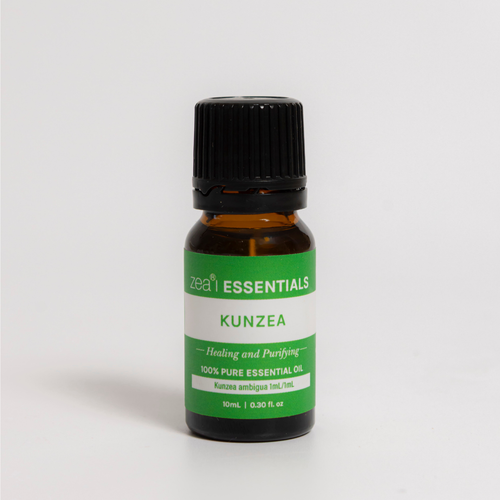
Australian Kunzea oil is one of the most remarkable botanical discoveries to come out of Tasmania. Distilled from the leaves and branchlets of the Kunzea ambigua plant - a flowering shrub native to the cooler coastal regions of south-eastern Australia - Kunzea oil has earned a well-deserved reputation as a powerful natural remedy for pain, inflammation, skin irritation, and stress.
At Zea, Kunzea is at the heart of everything we do. We've spent years formulating products around this exceptional oil, and every day we hear from customers whose lives have been genuinely improved by it. Here's everything you need to know.
Want the full picture? Explore our complete guide to Kunzea oil - what it is, the science behind it, how to use it, and where to buy pure Tasmanian Kunzea.
What is the Kunzea Ambigua Plant?
Kunzea ambigua (also known as Tasmanian Kunzea, Tick Bush, White Cloud, or simply "the Zea plant") is a small-leafed shrub in the Myrtle family, Myrtaceae. It grows almost exclusively in the cooler coastal areas of south-eastern Australia - particularly in Tasmania and the Bass Strait Islands - making it one of the most geographically unique botanicals in the world.
The plant grows up to three metres tall and produces clusters of delicate white flowers in spring. It's the leaves and green branchlets that are steam-distilled to produce the pure essential oil - a pale yellow liquid with a fresh, clean, slightly medicinal aroma often described as "the Australian bush in a bottle."
The story of Kunzea oil's discovery as a therapeutic ingredient is a characteristically Australian one: a local Tasmanian farmer noticed the native wildlife seeking shelter under Kunzea bushes, seemingly for relief from ticks and parasites. Curiosity led to extraction, and from there to research - and eventually to a listing with the Therapeutic Goods Administration (TGA) and the thriving natural health industry that exists around it today.
What Makes Kunzea Oil Special?
Kunzea oil's key active compounds include alpha-pinene, 1,8-cineole, terpinen-4-ol, globulol, and viridiflorol. Peer-reviewed phytochemical analysis of Tasmanian-grown Kunzea ambigua confirms this profile and the anti-inflammatory, anti-bacterial and fumigant activity it produces1. Together, these compounds give Kunzea its distinctive combination of properties:
- Anti-inflammatory - reduces inflammation at the site of application
- Analgesic - helps relieve localised pain in muscles and joints
- Antimicrobial - effective against a range of bacteria, including Staphylococcus aureus; terpinen-4-ol in particular is associated with strong antimicrobial activity1
- Calming - used aromatically to reduce nervous tension, stress and mild anxiety
Compared to other essential oils like Tea Tree, Kunzea contains a lower concentration of cineole - making it significantly gentler on sensitive skin while still delivering strong therapeutic benefits. Many people who find Tea Tree too harsh find Kunzea to be a well-tolerated, effective alternative.
Why Harvest Timing Changes Kunzea Oil's Potency
Not all Kunzea oil is chemically identical - and this is one of the more interesting findings in recent research. A 2022 study on the effect of harvest season and coppicing height found that Kunzea ambigua's bioactive compound levels shift noticeably through the year1:
- Autumn-harvested oil showed the highest concentrations of 1,8-cineole and viridiflorol - the compounds most associated with anti-inflammatory activity.
- Spring growth, by contrast, produced more alpha-pinene and bicyclogermacrene, likely a plant defence response to new leaf growth after cutting - while viridiflorol dropped by around a third.
- Terpinen-4-ol, the strongest antimicrobial component, stayed relatively stable regardless of season.
In practical terms, this means where and when Kunzea is harvested genuinely affects the strength of the finished oil. It's part of why Zea sources exclusively from wild and cultivated Tasmanian stands rather than relying on a single generic supply - consistency in growing conditions and harvest practice matters for a botanical this variable.
What is Kunzea Oil Used For?
Muscle and Joint Pain
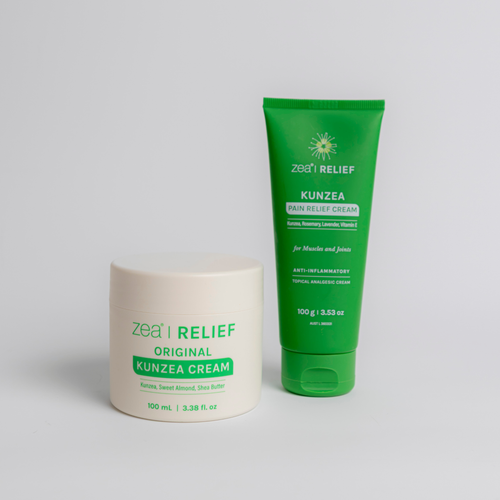
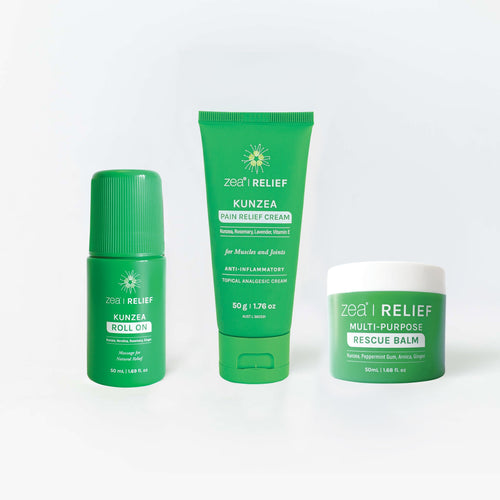
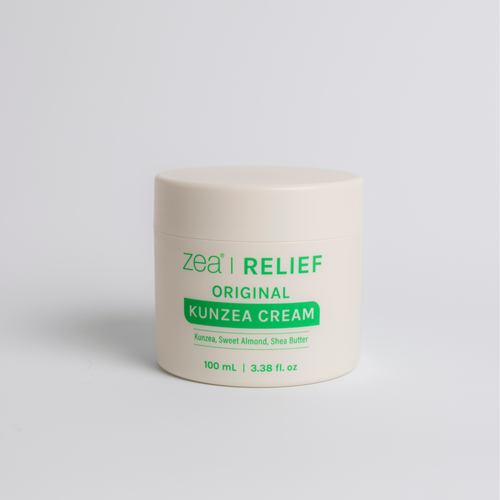
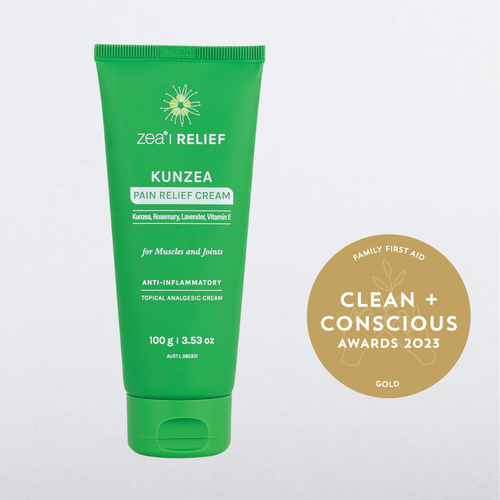
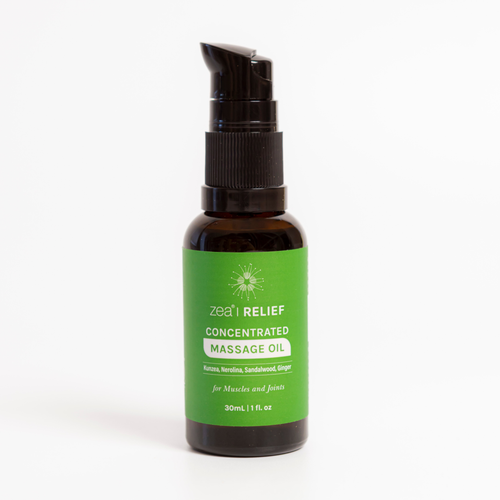
The anti-inflammatory properties of Kunzea oil make it one of the most effective natural options for relieving muscular aches and joint pain. When applied topically, it absorbs quickly into the skin and gets to work on the affected area. Our best-selling Kunzea Pain Relief Cream and Kunzea Concentrated Massage Oil are formulated to deliver this relief in a convenient, skin-friendly form. If foot pain specifically is the issue, our guide to relieving plantar fasciitis symptoms naturally covers Kunzea's role alongside stretching and footwear changes.
Curious why Kunzea-based creams have that noticeable cooling sensation on skin? We cover the mechanism in Why Does Pain Relief Cream Tingle? What's Actually Happening. Kunzea's anti-inflammatory compounds also show up outside pain relief - see Kunzea as an Anti-Inflammatory Functional Food for how it works as an ingested honey.
Arthritis and Chronic Pain
Thousands of Australians use Kunzea-based products daily to help manage arthritis and chronic pain conditions. Kunzea's anti-inflammatory compounds may help reduce swelling and stiffness in affected joints, and many customers report that regular application helps them stay mobile and comfortable throughout the day.
Skin Irritation and Inflammation
Kunzea is one of the few essential oils gentle enough to be used on sensitive, reactive or eczema-prone skin. Applied topically (diluted in a carrier or in a cream base), it can help soothe dry, red, or inflamed skin. Our Multi-Purpose Rescue Balm is particularly popular for skin conditions.
Stress, Anxiety and Mental Clarity
Diffused aromatically, Kunzea has a deeply calming effect on the nervous system. It's been described as "the Australian bush after rain" - fresh, grounding, and restorative. Add 4-6 drops to a diffuser to create a peaceful home environment, reduce anxious thoughts, and support mental clarity.
Respiratory Support
Kunzea's alpha-pinene and cineole content give it properties that support clear breathing and healthy respiration. Diffusing Kunzea during cold and flu season - or adding it to steam inhalation - can help ease congestion and support recovery.
Bath and Recovery
Adding Kunzea oil (or our Kunzea Bath Salts) to a warm bath is one of the most enjoyable ways to experience its therapeutic benefits. The combination of heat and Kunzea's active compounds helps to relax muscles, ease tension, and promote deep, restorative sleep.
Is Kunzea Oil Safe?
Yes - Kunzea oil is one of the gentlest essential oils available. It is non-irritating, non-sensitising, and suitable for most skin types including sensitive skin. It's also safe for children when diluted appropriately. As with all essential oils, avoid direct contact with eyes and mucous membranes, and always dilute before topical application if using the pure essential oil.
Frequently Asked Questions
Where does Kunzea oil come from?
Kunzea oil is distilled almost exclusively from plants grown in Tasmania and the Bass Strait Islands - it's one of Australia's most geographically unique native botanicals.
Is Kunzea the same as Tea Tree?
No - though they share some similarities, Kunzea and Tea Tree are different plants with different chemical compositions. Kunzea has a lower cineole content, making it gentler and better suited to sensitive skin.
Can Kunzea oil be applied directly to the skin?
The pure essential oil should be diluted in a carrier oil before topical application. Our Zea Relief creams and balms are already formulated for direct skin use.
What does Kunzea oil smell like?
Fresh, clean, slightly medicinal and herbaceous - often described as the scent of the Australian bush. Most people find it very pleasant, especially compared to the stronger, medicinal scent of Tea Tree.
Does the harvest season affect the oil I buy?
Yes, in theory - though at Zea our supply is blended and standardised so every batch of finished product meets the same specification, regardless of when the raw material was harvested.
Kunzea oil is Tasmania's best-kept secret - and at Zea, we're proud to share it with the world. Whether you're looking for natural pain relief, skin care, or simply a calming daily ritual, there's a Kunzea product that's right for you.
About the Author
Hayden Brass, Founder & CEO of Zea
Hayden founded Zea in 2016 as a family market stall in Tasmania, built around Kunzea oil wild-harvested by Kevin and Brenda Wagner. Zea has since grown into a multi-brand natural health company and Australia's only pain relief B Corp, still built on the same Tasmanian Kunzea range that started it all. Read more about Zea's story →
References
Sources open in a new tab so you do not lose your place.
- 1. Park C, Garland SM, Close DC. The Effect of the Height of Coppicing and Harvest Season on the Yield and Quality of the Essential Oil of Kunzea ambigua. Plants (Basel), 2022;12(1):20. View source