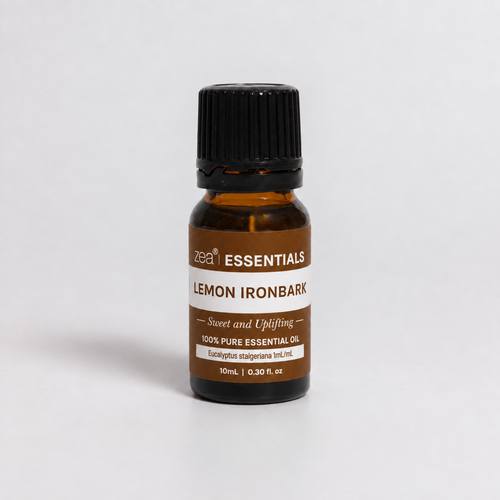
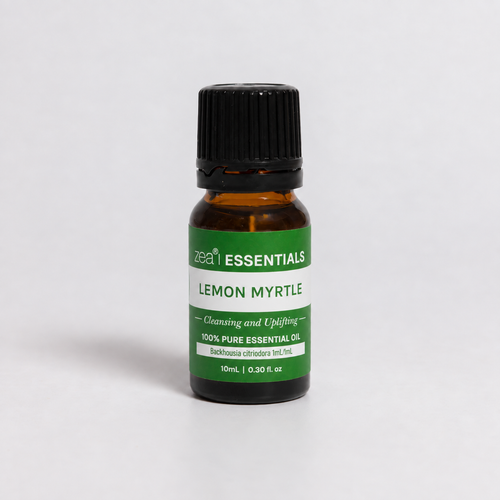
Lemon Ironbark essential oil is steam distilled from Eucalyptus staigeriana, a small ironbark tree restricted to a narrow pocket of Cape York Peninsula in far north Queensland. It is one of three Australian native oils that get lemon in their common name and are routinely confused with each other: Lemon Ironbark, Lemon Myrtle (Backhousia citriodora) and Lemon Scented Gum (Corymbia citriodora). They are three different species in three different genera, with three genuinely different chemistries, and this guide exists to untangle which is which.

If you have ever picked up a bottle labelled "lemon eucalyptus" and wondered whether it is the same as the Lemon Myrtle oil in your diffuser, or wondered why Lemon Ironbark smells rounder and sweeter than a sharp citrus oil, this covers the botany, the chemistry and how to use Lemon Ironbark specifically.
Lemon Ironbark at a glance
Here is the spec sheet for the oil itself before we get into the three-way comparison.
| Feature | Detail |
|---|---|
| Botanical name | Eucalyptus staigeriana F.Muell. ex F.M.Bailey1 |
| Also known as | Lemon-Scented Ironbark2 |
| Plant family | Myrtaceae (the same family as Kunzea, Tea Tree, Manuka and Lemon Myrtle) |
| Plant part and method | Leaves, steam distilled |
| Native range | A narrow band of hilly country in the Maytown, Palmer River and Maitland Downs area of Cape York Peninsula, North Queensland1 |
| Growth habit | Tree to about 12 metres, forms a lignotuber, dark grey to black ironbark on the trunk and branches1 |
| Main constituents | Citral 34.32% (geranial 21.83%, neral 12.49%), limonene 20.60%, 1,8-cineole 12.33%3 |
| Aroma | Sweet, fresh and woody with a soft lemon note, often compared to lemon sherbet rather than sharp citrus |
| Blends well with | Kunzea, Coastal Tea Tree, Lavender and other citrus oils |
| Regulatory status (as sold by Zea) | Cosmetic essential oil, not a listed medicine |
Zea's own Lemon Ironbark Essential Oil is distilled from this species and sits in the Australian native essential oils collection, alongside the Kunzea and Lemon Myrtle ranges.
Three lemon-scented Australian natives: how to tell them apart
This is the actual source of the confusion, and the reason this guide exists. All three plants are lemon scented, all three sit in the Myrtaceae family, and all three get shortened to something close to "lemon eucalyptus" or "lemon oil" in casual conversation. But they are three separate genera with three separate dominant chemistries, and the differences matter more than the family resemblance suggests.
| Feature | Lemon Ironbark | Lemon Myrtle | Lemon Scented Gum |
|---|---|---|---|
| Botanical name | Eucalyptus staigeriana1 | Backhousia citriodora4 | Corymbia citriodora, formerly Eucalyptus citriodora5 |
| Genus | Eucalyptus (the ironbark group) | Backhousia, endemic to eastern Australia4 | Corymbia, reclassified out of Eucalyptus in 19955 |
| Native range | A narrow pocket of Cape York Peninsula, Queensland1 | Queensland's east coast rainforest, from the Sunshine Coast to Herberton4 | North-east Queensland south to Coffs Harbour, New South Wales5 |
| Growth form | Small ironbark tree to about 12m, dark rough bark, lignotuber1 | Rainforest tree, typically to 8m, taller if crowned4 | Tall gum with smooth, shedding bark, 25 to 40m, sometimes to 50m5 |
| Dominant oil constituents | Citral 34.32% (geranial and neral), limonene 20.60%, 1,8-cineole 12.33%3 | Citral 90 to 98%, the highest natural citral content recorded4 | Alpha-citronellal around 56%, alongside citronellol and isopulegol6 |
| Sold by Zea | Yes, Lemon Ironbark Essential Oil | Yes, Lemon Myrtle Essential Oil | Not currently, included here for comparison only |
The single most useful fact in that table is the chemistry row. Citral, the compound responsible for a bright, sharp lemon top note, makes up nearly the entire oil in Lemon Myrtle. Lemon Ironbark carries a real but smaller share of citral, diluted by a substantial amount of limonene (the same compound found in citrus peel) and 1,8-cineole (a cooling, eucalyptus-type note). Lemon Scented Gum's oil is a different story again, dominated by citronellal rather than citral, which is why chemical analysis of its leaves is closer to citronella oil in composition than to either of the other two6. Same family, same "lemon" in the name, three different noses.

Botany and origin: a narrow corner of Cape York
Eucalyptus staigeriana is genuinely restricted in where it grows. It is found naturally only in hilly country around Maytown, the Palmer River and Maitland Downs, a small area of Cape York Peninsula in far north Queensland1. It grows to around 12 metres, forms a lignotuber (a woody swelling at the base that lets the tree resprout after fire or damage), and carries dark grey to black ironbark on its trunk and branches, distinct from the smooth, shedding bark of a gum like Lemon Scented Gum1. Among the region's ironbarks, it is described as easily told apart from every other ironbark species by the strong lemon smell released when its leaves are crushed, a feature none of its close relatives share1.
The species carries the name of Karl Theodore Staiger, a 19th-century Queensland Government Analytical Chemist with a documented interest in the essential oils of eucalypts1, which is a fitting namesake for a tree whose whole identity comes down to its oil chemistry rather than its appearance.
Aroma profile: why it reads softer and sweeter than a sharp citrus oil
Most people expect a "lemon" essential oil to smell like a piercing citrus top note. Lemon Ironbark doesn't, and the chemistry explains why. Citral (geranial plus neral) is the compound most responsible for a bright, sharp lemon character, and in Lemon Ironbark it accounts for around a third of the oil rather than the vast majority3. The rest is largely limonene, the same terpene that gives orange and lemon peel their sweeter, rounder citrus note, plus 1,8-cineole, a cooling, camphoraceous compound shared with several other eucalypts3.
The practical result is an oil that leans sweet, fresh and gently woody rather than sharp, which is exactly how Zea's own product description frames it: "gently sweet, fresh, woody, lemony" and comparable to the scent of lemon sherbet. It reads as one of the more approachable eucalypt-family oils for people who find a straight Eucalyptus or Tea Tree note too sharp, while still keeping a recognisably native, woody backbone that a pure citrus oil (like Lemon or Sweet Orange) doesn't have.
Lemon Ironbark vs Lemon Myrtle
This is the comparison people actually search for, and the answer is simple: no, they are not the same oil. Lemon Myrtle is a different genus, Backhousia, from a rainforest tree endemic to Queensland's east coast, and its defining feature is chemical purity: citral typically makes up 90 to 98% of the oil, which is why Lemon Myrtle reads as the more intensely, singularly lemon-scented of the two4. Lemon Ironbark's more mixed profile of citral, limonene and cineole gives it a softer, rounder, less one-note character. If Lemon Myrtle is a lemon zested straight into your hand, Lemon Ironbark is closer to lemon sherbet: still recognisably citrus, but softened and sweetened by other notes. We've covered Lemon Myrtle's full chemistry, its much lower recommended dilution ceiling and its uses in detail in Benefits and Uses of Lemon Myrtle Oil, which is worth reading alongside this guide rather than instead of it.
If you'd like the same kind of side-by-side treatment for another commonly confused set of Australian and New Zealand natives, Kanuka vs Kunzea vs Manuka Oil untangles that trio the same way this guide untangles the three lemon-scented natives.

How to use Lemon Ironbark oil
Lemon Ironbark is sold and used as a cosmetic essential oil, not a therapeutic product, so the guidance below is general good practice for essential oil use rather than a medical instruction.
- Diluting for topical use: essential oils are typically diluted in a carrier oil, such as jojoba, almond or coconut oil, before any skin contact rather than applied undiluted. A modest starting percentage in the carrier is sensible, increasing only with experience and skin tolerance.
- Patch testing: apply a small diluted amount to the inside of your forearm and wait 24 hours before wider use, checking for any redness, itching or irritation.
- Diffusing: Lemon Ironbark's softer, sweeter profile makes it a comfortable choice for an ultrasonic diffuser, either alone or blended with other Australian natives or citrus oils. Follow your diffuser's own guidance on water and oil ratios, and avoid running it continuously in a closed room.
- Blending partners: its woody-lemon character sits naturally alongside Kunzea and Coastal Tea Tree for a distinctly Australian native profile, or with Lavender to soften a blend for evening use. It also turns up alongside Bergamot and other citrus notes in ready-made diffuser blends such as the Heaven Scent Lifestyle Blend, if you would rather not measure a blend yourself.
- General precautions: keep essential oils away from the eyes and mucous membranes, out of reach of children and pets, and check with a GP or pharmacist before use if you are pregnant, breastfeeding or have particularly sensitive skin.
If you'd like to understand how a supplier verifies that a bottle labelled "Lemon Ironbark" genuinely contains the oil it claims to, rather than a cheaper substitute or a diluted blend, How Essential Oil Purity Is Verified covers GC/MS testing and Certificates of Analysis in detail.
Frequently asked questions
What is Lemon Ironbark oil?
Lemon Ironbark oil is steam distilled from the leaves of Eucalyptus staigeriana, a small ironbark tree native to a narrow area of Cape York Peninsula in far north Queensland1. Its oil carries citral, limonene and 1,8-cineole, giving it a sweeter, softer lemon character than a single-note citrus oil3.
Is Lemon Ironbark the same as Lemon Myrtle?
No. They come from different genera entirely: Lemon Ironbark is Eucalyptus staigeriana, while Lemon Myrtle is Backhousia citriodora, a rainforest tree endemic to Queensland's east coast4. Lemon Myrtle's oil is close to pure citral (90 to 98%), while Lemon Ironbark's is a mix of citral, limonene and 1,8-cineole, which is why the two smell related but distinct34.
What does Lemon Ironbark smell like?
Sweet, fresh and woody with a soft lemon note, often compared to lemon sherbet rather than a sharp citrus peel. That character comes from its mixed chemistry: only around a third of the oil is citral, with limonene and 1,8-cineole rounding out the rest3.
How do you dilute it?
As with most essential oils, Lemon Ironbark is diluted in a carrier oil, such as jojoba or almond oil, before topical use rather than applied undiluted. A modest percentage is a sensible starting point, with a patch test on the inner forearm 24 hours before wider use.
Can you diffuse it?
Yes. Lemon Ironbark's soft, sweet aroma works well in an ultrasonic diffuser, either alone or blended with other Australian natives, Lavender or citrus oils. Follow your diffuser's own water and oil ratio guidance and avoid running it continuously in a closed room.
References
Sources open in a new tab so you don't lose your place.
- 1. EUCLID, Centre for Australian National Biodiversity Research (CANBR). Eucalyptus staigeriana F.Muell. ex F.M.Bailey. View source
- 2. Atlas of Living Australia. Eucalyptus staigeriana : Lemon-Scented Ironbark. View source
- 3. Pedrotti, C. et al. Antifungal activity of essential oil from Eucalyptus staigeriana against Alternaria alternata causing leaf spot and black rot in table grapes. Anais da Academia Brasileira de Ciências 94(2):e20200394, 2022. View source
- 4. Southwell I. Backhousia citriodora F. Muell. (Lemon Myrtle), an Unrivalled Source of Citral. Foods 10(7):1596, 2021. View source
- 5. Atlas of Living Australia. Corymbia citriodora : Lemon-Scented Gum. View source
- 6. Salem, M.Z.M. et al. Bioactivity of essential oils extracted from Cupressus macrocarpa branchlets and Corymbia citriodora leaves grown in Egypt. BMC Complementary and Alternative Medicine 18:23, 2018. View source