
One of the most common myths about joint health is that cracking your knuckles causes arthritis. For decades, people have been warned against the habit, often by parents, grandparents, or teachers convinced that the familiar cracking sound would eventually damage the joints.
The short answer: cracking your knuckles does not cause arthritis.
Despite how widespread the belief is, research has consistently shown no direct link between knuckle cracking and arthritis development. In fact, the science behind the sound is far more interesting than the myth itself.
Understanding why knuckles crack can also help explain what arthritis actually is, what contributes to joint problems over time, and the everyday habits that really do matter when it comes to looking after your joints long-term.
What Is That Popping Sound?
Before we get into the myth, it helps to understand what's actually happening when a joint "cracks."
Your joints, including your knuckles, knees, hips, and spine, are surrounded by a fluid-filled capsule. Inside this capsule is a lubricating liquid called synovial fluid, which helps cushion the joint and reduce friction during movement.
When you stretch or pull a joint beyond its normal resting position, you create a small change in pressure within that capsule. This causes gases dissolved in the synovial fluid, primarily carbon dioxide, to rapidly form bubbles, which then collapse or "pop." That's the sound you hear.
The technical term for this is tribonucleation, though most people just call it knuckle cracking.
After the pop, it usually takes around 15-30 minutes before the gases redissolve and you can crack the same joint again. That's why you can't crack the same finger twice in quick succession.
The Man Who Cracked One Hand for 60 Years
No conversation about this topic is complete without mentioning Dr. Donald Unger, a physician who was so determined to prove his mother wrong that he conducted a self-experiment over six decades.
From the age of around 18, Dr. Unger cracked the knuckles of his left hand at least twice a day, every day, for 60 years. His right hand? He left it completely alone as the control.
At the end of the experiment, he found no arthritis in either hand, and no significant difference between the two. He eventually published his findings in Arthritis & Rheumatism in 1998, winning an Ig Nobel Prize (a parody award for unusual but real research) in the process.
While it was a one-person study, the message was clear: cracking your knuckles over a lifetime, in itself, does not appear to cause arthritis.

What Does the Research Say?
Dr. Unger's self-experiment is entertaining, but researchers have also looked at larger populations.
A study published in the Journal of the American Board of Family Medicine compared habitual knuckle crackers with non-crackers across 215 people and found no increased rate of arthritis in the knuckle-cracking group. Some research has suggested that very forceful, habitual knuckle cracking over many years might be linked to slight hand swelling or reduced grip strength in a small number of people, but these findings are inconsistent, and arthritis was not among the outcomes.
The overall consensus from rheumatologists and orthopaedic specialists? Joint cracking, on its own, is not a risk factor for arthritis.
So What Actually Causes Arthritis?
This is where the conversation gets more useful. Understanding what does cause arthritis helps you take meaningful steps to protect your joints.
There are over 100 types of arthritis, but the two most common are:
Osteoarthritis
This is the "wear and tear" type, the most common form in Australia, affecting around 2.1 million Australians. It happens when the cartilage that cushions the ends of your bones gradually breaks down over time. Risk factors include:
• Age (wear accumulates over decades)
• Genetics and family history
• Previous joint injuries (especially to the knee, hip, or shoulder)
• Excess body weight, which places more load on joints
• Repetitive movements or physically demanding work
• Being female, particularly post-menopause, when changing hormone levels can affect joint tissue
Rheumatoid Arthritis
This is an autoimmune condition, meaning the body's immune system mistakenly attacks its own joint tissue. It's not caused by mechanical wear but by an inflammatory immune response. Risk factors include genetics, hormonal factors, and in some cases, infections that may trigger the immune system.
Neither of these conditions is caused by cracking your knuckles.
When Should You Pay Attention to Joint Cracking?
While the occasional pop is generally harmless, there are some situations where joint sounds are worth noticing:
• Pain with the crack: If cracking your knuckles or any joint is accompanied by pain, that's a signal worth taking seriously
• Swelling or stiffness: These, alongside popping or clicking, can be early signs of a joint issue worth checking with a GP
• Consistent clicking in larger joints: A knee or hip that clicks regularly and feels unstable could suggest cartilage damage or a meniscal issue, rather than harmless gas bubbles
• New sounds after an injury: If cracking in a joint starts after a sprain or fall, it's worth having assessed by a professional
The occasional crack in a healthy, pain-free joint? Likely harmless. But pain and cracking together are always worth investigating.

How to Actually Look After Your Joints
If joint health and arthritis prevention are your goals, here are the habits that genuinely make a difference:
• Stay active: Regular, low-impact movement like walking, swimming, and cycling keeps cartilage nourished and joints mobile. Movement helps bring nutrients into cartilage, which has no blood supply of its own.
• Maintain a healthy weight: Each kilogram of body weight places roughly three to five kilograms of force on the knee joints, so even modest weight reduction can meaningfully ease joint load.
• Strengthen the muscles around your joints: Particularly the quadriceps for knee support, and the core for spinal health.
• Eat an anti-inflammatory diet: Foods rich in Omega-3 fatty acids (salmon, sardines, walnuts, flaxseed), antioxidants (berries, leafy greens), and Vitamin D support joint health from the inside out.
• Protect your joints from injury: Warm up before exercise, use correct technique when lifting, and don't push through joint pain.
• Listen to your body: Early stiffness, persistent aching, or reduced range of motion are worth discussing with a healthcare provider sooner rather than later.
Natural Support for Everyday Joint Comfort
For those already experiencing joint aches, stiffness, or muscle soreness, topical support can be a practical addition to everyday wellbeing, especially after exercise, long days on your feet, or during colder weather when discomfort tends to flare up.
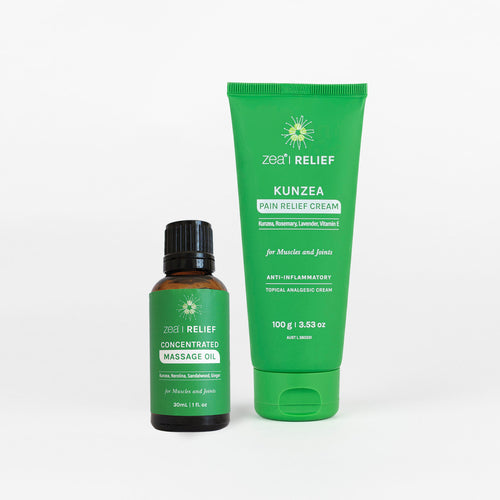
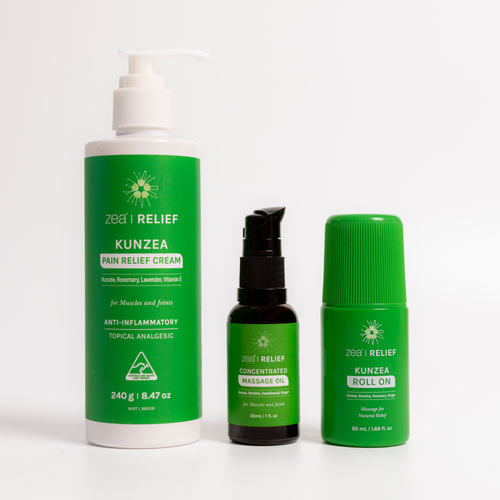
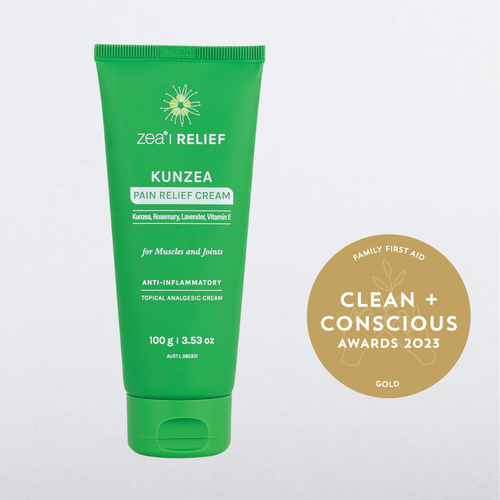
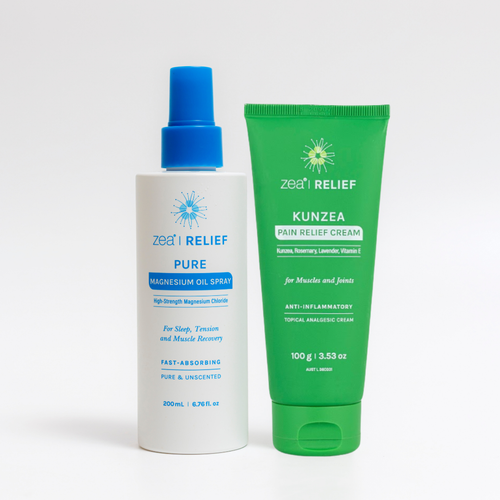
Kunzea Pain Relief Cream is formulated with 100% natural active ingredients, including Tasmanian Kunzea Oil, Rosemary Extract, Tasmanian Lavender Oil, and Vitamin E. This anti-inflammatory cream is designed to quickly absorb into the skin and target areas of discomfort, helping to relieve muscle aches, mild joint pain, soreness, strains, and inflammation.
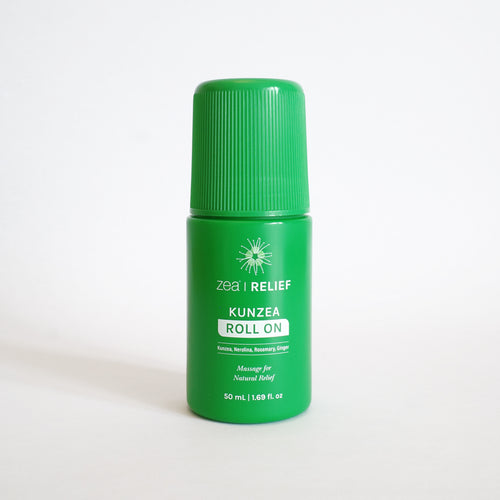
For targeted, on-the-go application, the Kunzea Roll On offers a lightweight, no-mess alternative that’s ideal for hard-to-reach areas like the neck, shoulders, and back. Made with Kunzea, Nerolina, Rosemary, Ginger, and Peppermint Gum oils, the roll on provides a refreshing, soothing sensation while fitting easily into a handbag, gym bag, or desk drawer for convenient use throughout the day.
Whether it’s easing post-workout tension, soothing tired joints after a long walk, or helping you stay comfortable during busy days, these naturally derived topical products offer a simple way to support everyday movement and recovery.

The Bottom Line
Cracking your knuckles is not going to give you arthritis. That old saying, repeated by well-meaning family members for generations, simply doesn't hold up to scrutiny, and the science is fairly clear on this one.
What does matter for your joint health is the longer game: staying active, managing your weight, eating well, and protecting your joints from unnecessary strain. Arthritis is largely shaped by genetics, age, hormones, and injury history, not by the satisfying pop of a knuckle.
If your joints are painful, stiff, or swollen, regardless of whether you crack them, that's worth a conversation with your doctor. But if you're just someone who can't resist the occasional crack? You can probably stop worrying about this one.
References
-
Castellanos, J., & Axelrod, D. (1990). Effect of habitual knuckle cracking on hand function. Annals of the Rheumatic Diseases, 49(5), 308-309. https://doi.org/10.1136/ard.49.5.308
-
Deweber, K., Olszewski, M., & Ortolano, R. (2011). Knuckle cracking and hand osteoarthritis. The Journal of the American Board of Family Medicine, 24(2), 169-174. https://doi.org/10.3122/jabfm.2011.02.100156
-
In, J. (2022). CRACK! The sound of arthritis? SQ Online. https://sqonline.ucsd.edu/2022/11/crack-the-sound-of-arthritis/
-
Kawchuk, G. N., Fryer, J., Jaremko, J. L., Zeng, H., Rowe, L., & Thompson, R. (2015). Real-time visualization of joint cavitation. PLOS ONE, 10(4), e0119470. https://doi.org/10.1371/journal.pone.0119470
-
Arthritis Australia. (2023). What is arthritis? https://www.arthritisaustralia.com.au/understanding-arthritis/what-is-arthritis/


![Kunzea Pain Relief Cream [Value Pack]](http://www.zea.com.au/cdn/shop/files/Neutral_Images_Website_1080_x_1080_12_aeeb7fb5-6b18-4315-99ea-c7a97403e37a.png?v=1776732033&width=500)


