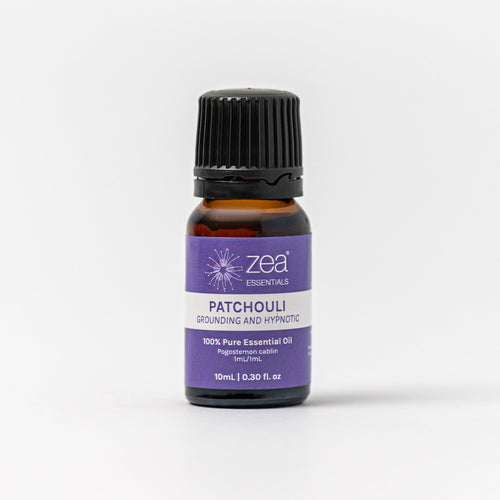
Patchouli oil is steam distilled from the cured leaves of Pogostemon cablin, a bushy herb in the mint family, and its thick, earthy aroma comes down to one dominant molecule: patchoulol. It is one of the most recognisable scents in the essential oil world, and one of the most divisive - people tend to either love it or actively dislike it, often before they have smelled it in isolation. The reason for that split, and for the odd fact that Patchouli is one of the only essential oils widely believed to improve with storage rather than fade, comes down to its chemistry and the unusual way the leaves are processed before distillation.

What Patchouli oil is
Patchouli oil comes from Pogostemon cablin, a perennial herb in the Lamiaceae family - the same family as mint, basil and lavender1. That is a genuine surprise to a lot of people, since Patchouli smells nothing like a typical mint-family herb, and nothing like the Myrtaceae oils (Tea Tree, Kunzea, Eucalyptus) it often sits alongside on an oil shelf. The plant grows as a bushy shrub reaching around 0.5 to 1 metre, native to tropical Asia and cultivated commercially across Indonesia, India, China and the Philippines. Only the leaves are used for oil production - stem and root material contribute a very different, less desirable chemical profile2.
The oil is extracted by steam distillation of the dried, cured leaves. It is a genuinely high-yielding leaf, with reported oil content in fresh leaf material of roughly 2.5% to 5%, considerably higher than the stem3.
Patchouli Essential Oil at a glance
The spec below is a starting reference, not a substitute for the batch-specific data on any bottle you buy - natural oils vary by harvest and origin.
| Feature | Detail |
|---|---|
| Botanical name | Pogostemon cablin (Blanco) Benth. |
| Family | Lamiaceae (mint family)1 |
| Plant part used | Leaves, cured and partially dried before distillation |
| Extraction method | Steam distillation |
| Origin | Native to tropical Asia; major producers include Indonesia, India and China |
| Dominant constituent | Patchoulol (patchouli alcohol) - reported at roughly 15% in one GC-MS analysis of oral-care-grade oil, and considerably higher (25-30%+) in other analyses depending on origin and grade4 |
| Other key constituents | alpha-Guaiene, Delta-Guaiene, alpha-Patchoulene and related sesquiterpenes4 |
| Aroma profile | Earthy, woody, damp-soil, slightly sweet and musky |
| Note position | Base note |
| Blends well with | Lavender, Sandalwood, Bergamot, Rose, Frankincense, Cedarwood |
Why Patchouli smells the way it does
Every essential oil's aroma comes down to which molecules dominate its chemistry, and Patchouli's is unusually concentrated around one compound: patchoulol, also called patchouli alcohol. It is a sesquiterpene alcohol, and depending on the origin, grade and analytical method used, published GC-MS figures for its share of the oil range from around 15% up to over 30%4. Alongside it sit a cluster of related sesquiterpenes - alpha-Guaiene, Delta-Guaiene and alpha-Patchoulene among them - which is a genuinely complex constituent picture for a single-species oil4.
Sesquiterpenes as a class tend to be heavier, less volatile molecules than the monoterpenes that dominate brighter, sharper-smelling oils like Kunzea or Eucalyptus. That heaviness is exactly why Patchouli reads as deep, earthy and lingering rather than fresh or sharp, and why it sits at the base of the note pyramid instead of the top4. It is also why a single drop of Patchouli can still be detected on a fabric or in a blend long after brighter top notes like Bergamot or Lemon Myrtle have faded.
Leaf is specifically where this chemistry is concentrated. A comparative GC-MS study of different plant parts found meaningfully higher patchoulol content in the leaves than in the stems, while the stems carried more of a different compound, pogostone - one reason commercial quality standards for Patchouli material specify a minimum leaf content in the distilled batch2.

The leaf-curing step - an unusual production detail
Most essential oils go from harvest to still with minimal processing in between. Patchouli is an exception. After harvest, the leaves are cut, bundled and left to wilt and partially dry in the shade over several days, and in many production regions they are then heaped for a short, mild fermentation before distillation5. This curing step is not cosmetic - it physically breaks down cell walls and gland membranes within the leaf tissue, which is what makes the oil trapped inside those cells accessible to steam distillation in the first place5.
Research into this step has looked specifically at how long the curing period should run. One study testing fermentation periods of two, four, six, eight and ten days found that oil yield increased steadily out to around eight days of fermentation before dropping off by day ten, suggesting there is a practical window rather than a "longer is always better" relationship5. This curing and drying step, done well, is part of what gives commercial Patchouli oil its depth and consistency batch to batch, and it is a genuinely unusual production detail among the essential oils on a typical shelf.
Does Patchouli oil get better with age?
This is the claim most associated with Patchouli, and it deserves a careful answer. Within perfumery, it is widely held that Patchouli oil is one of the very few essential oils that improves with age rather than degrading - described by perfumers and oil houses as mellowing, rounding out and losing a sharper, more camphoraceous edge over a year or more of storage, in the way patchouli is sometimes compared to a good wine.
We were not able to verify this in a primary scientific source, despite a genuine search for one. That does not mean it is untrue - sensory ageing effects are notoriously hard to study formally, and the claim is old, specific and consistent across independent perfumery sources rather than a single marketing line repeated once. But we want to be straight about the evidence: treat "Patchouli improves with age" as a long-standing convention within perfumery and aromatherapy, not as an established scientific finding, until a primary study says otherwise. If you have a bottle that has been stored well - away from heat, light and air - for a year or two, it is entirely reasonable to expect its aroma has changed and, by the account of most perfumers, deepened. Whether that qualifies as scientifically "improved" is a separate question this article cannot answer for you.
Practical use: dilution, testing and blending
Patchouli essential oil is a concentrated, 100% natural product, not a finished skincare or therapeutic item, and it should be treated with the same care as any essential oil.
- Dilute before skin contact. Mix Patchouli oil into a carrier oil (such as jojoba, sweet almond or fractionated coconut oil) before applying to skin. A common starting dilution for adults is around 1-2% Patchouli in carrier oil, which is roughly 5-10 drops per 30ml.
- Patch test first. Apply a small diluted amount to the inner forearm and wait 24 hours before wider use, particularly if you have sensitive skin.
- Diffusion. A few drops in an ultrasonic diffuser is the simplest way to experience Patchouli's aroma without any dilution maths, and it is where its role as a base note is most obvious - it lingers in a room long after brighter oils have dispersed.
- Use it as an anchor, not a lead. Because Patchouli is a base note, a little goes a long way in a blend. Perfumers typically use it in small proportions to give a blend depth and tenacity, letting brighter top and middle notes (citrus, floral, herbaceous oils) do the work of first impression while Patchouli keeps the scent grounded and long-lasting on skin or fabric.
- Not for internal use, and keep out of reach of children and pets. Essential oils are for topical (diluted) or aromatic use only.

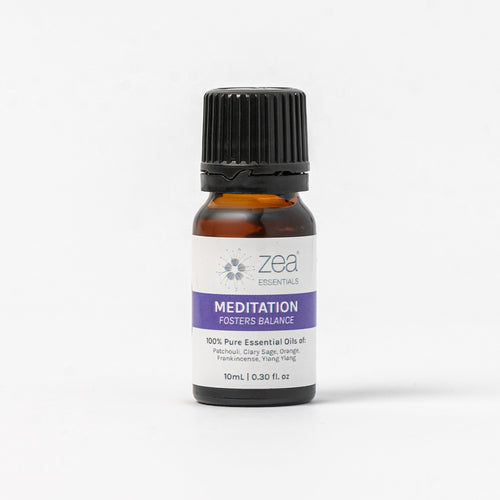
Patchouli's grounding, earthy character is exactly why it turns up so often in blends built around calm and focus rather than energy - it is the reason a Meditation Lifestyle Blend leans on a base note like this rather than something brighter. If you want to build your own grounding blend, Zea's Patchouli Essential Oil pairs naturally with lighter top notes.
Patchouli in context: how it differs from Zea's Australian native oils
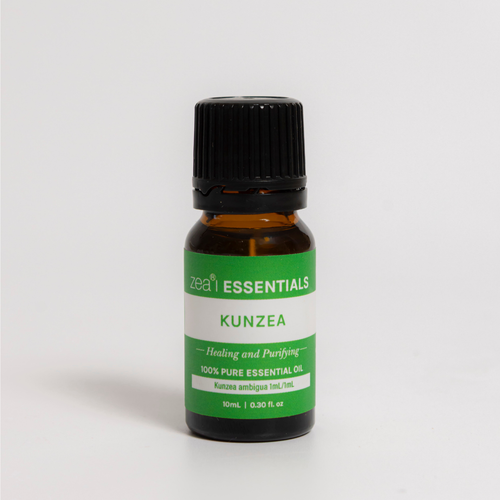
Patchouli's mint-family origin and heavy sesquiterpene profile put it in a genuinely different category to the Myrtaceae oils Zea is best known for. Kunzea Essential Oil, for instance, is dominated by lighter monoterpenes and reads as fresher and more medicinal, which is part of why the two oils serve such different purposes in a blend - Kunzea toward the top or middle, Patchouli anchoring the base. If you have ever wondered how closely related oils with a similar tea-tree-adjacent reputation actually differ in chemistry and origin, our comparison of Kanuka, Kunzea and Manuka oil goes through that in detail, and it is worth reading alongside this one if you are building out a home aromatherapy collection with genuinely varied chemistry rather than several oils that smell alike.
The curing and fermentation step that shapes Patchouli's aroma also has a parallel worth knowing about closer to home - see how the distillation process itself, rather than pre-distillation curing, shapes the final oil in our piece on how Kunzea oil is grown and distilled. Both articles point at the same underlying idea: how a plant is processed before and during distillation matters as much to the finished oil as the species itself.
For the full range of Australian native oils Zea distils domestically, browse the Australian Botanicals collection, or explore ready-made Lifestyle Blends if you would rather start from a considered combination than build one from single oils.
Frequently asked questions
What does Patchouli smell like?
Earthy, woody and slightly sweet, with a musky, damp-soil quality that comes from its dominant sesquiterpene, patchoulol. It reads as deep and grounding rather than fresh or bright, which is why it sits at the base of a fragrance rather than the top.
Why do people either love or hate Patchouli?
Its aroma is unusually concentrated around one class of molecule - heavy, low-volatility sesquiterpenes like patchoulol - rather than the lighter, brighter monoterpenes most people associate with "clean" or "fresh" scents. That distinctive, unmistakable profile tends to produce a strong reaction either way, and cultural associations (from 1960s counterculture to modern niche perfumery) shape people's expectations of it before they smell it fresh.
Does Patchouli oil get better with age?
It is widely held within perfumery that it does, with aged oil described as smoother and more rounded than freshly distilled oil. We were unable to verify this specific claim in a primary scientific source, so we present it here as a long-standing perfumery convention rather than an established fact.
What does Patchouli blend well with?
As a base note, Patchouli pairs naturally with brighter top and middle notes that need grounding - Lavender, Bergamot, Rose, Sandalwood, Frankincense and Cedarwood are classic partners. A small proportion of Patchouli goes a long way in adding depth and tenacity to a blend.
How do you dilute Patchouli oil?
Mix into a carrier oil such as jojoba or sweet almond oil before skin contact - a common adult starting point is roughly 1-2% Patchouli in carrier (around 5-10 drops per 30ml). Always patch test on the inner forearm and wait 24 hours before wider use.
References
- Survey of the genome of Pogostemon cablin provides insights into its evolutionary history and sesquiterpenoid biosynthesis. PubMed Central. pmc.ncbi.nlm.nih.gov/articles/PMC4873823
- Wang C, et al. Comparative Analysis of Volatile Constituents in Different Parts and Essential Oil of Pogostemon cablin Using GC-MS Combined with Chemometrics. Journal of AOAC International, 2026. DOI: 10.1093/jaoacint/qsaf090
- Characterization of Bioactive Compounds from Patchouli Extracted via Supercritical Carbon Dioxide (SC-CO2) Extraction. PubMed Central. pmc.ncbi.nlm.nih.gov/articles/PMC9503852
- Alencar AA, et al. Antifungal and anti-biofilm activity of patchouli essential oil (Pogostemon cablin) against oral isolates of Candida albicans - GC-MS chemical characterisation. Brazilian Journal of Biology, 2026. DOI: 10.1590/1519-6984.293258 (cited here only for its GC-MS constituent data, not its antifungal findings)
- The role of pre-distillation fermentation in increasing patchouli oil productivity (Pogostemon cablin Benth). IOP Conference Series: Materials Science and Engineering, 2019. iopscience.iop.org/article/10.1088/1757-899X/494/1/012091