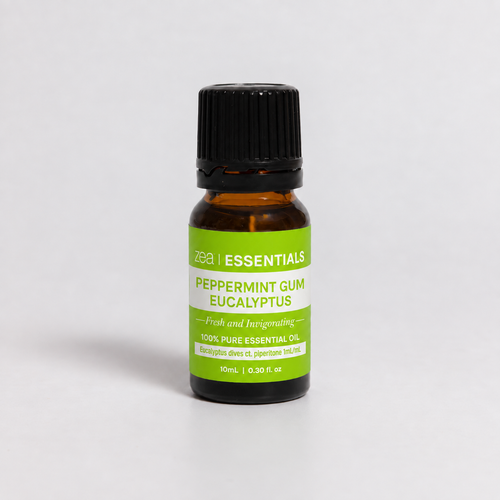
Peppermint Gum Eucalyptus Essential Oil is steam distilled from Eucalyptus dives, a species that smells minty and herbaceous rather than sharp and medicinal because its oil is typically built around piperitone, not the 1,8-cineole that dominates the more familiar Eucalyptus globulus and E. radiata oils. E. dives is not one fixed oil, either - historical Australian industry records describe it as being distilled in three separate chemotypes, with piperitone, phellandrene or cineole as the lead constituent depending on which stand of trees was cut and how the oil was rectified1. Zea's Peppermint Gum Eucalyptus Essential Oil is a cosmetic and aromatherapy product, not a listed medicine, and it is a genuinely different item from the culinary Peppermint Gum used in Zea Gourmet recipes, which is a food flavouring with no therapeutic claims attached to it at all.

This is Zea's dedicated guide to the species behind Peppermint Gum. Our broader Eucalyptus Essential Oil: Species, Uses and Benefits guide covers five commercial eucalyptus oils side by side - this article goes deeper on E. dives specifically: what its chemotypes actually are, where the "minty eucalyptus" reputation comes from, how it differs from Zea's standard Eucalyptus Essential Oil, and how it relates - and doesn't relate - to the culinary Peppermint Gum used in Zea Gourmet's Peppermint Gum Chocolate Truffles.
Botanical identity
| Attribute | Detail |
|---|---|
| Botanical name | Eucalyptus dives, commonly called Broad-leaved Peppermint |
| Family | Myrtaceae |
| Plant part used | Leaves and terminal branchlets |
| Extraction method | Steam distillation |
| Region | South-eastern Australia, including New South Wales and Victoria1 |
| Aroma profile | Minty, herbaceous and green - softer and less medicinal than globulus-type eucalyptus |
| Main constituents | Piperitone, phellandrene and 1,8-cineole, in ratios that vary by chemotype1 |
One species, three chemotypes: the piperitone hook
Most eucalyptus oil sold worldwide is 1,8-cineole dominant - that's E. globulus and E. radiata, the sharp, medicinal-smelling oils most people picture. E. dives is the odd one out among the well-known eucalypts, and it's more chemically variable than a single-line description can capture. A detailed historical survey of the Australian eucalyptus oil industry, drawing on distillery records and earlier chemical surveys, documents E. dives being commercially distilled in three distinct forms1:
| Chemotype | Lead constituent | Historical use category |
|---|---|---|
| Piperitone variant | Piperitone, roughly 40-56% of the oil, with phellandrene and cineole present | Classified industrial oil1 |
| Phellandrene variant | Phellandrene, roughly 60-80% of the oil, with piperitone and cineole present | Classified industrial oil1 |
| Cineole variant | Cineole, roughly 60-75% of the oil, with phellandrene and piperitone present | Classified medicinal oil1 |
The historical record is specific about why this mattered commercially, and it's worth stating plainly because it's easy to overstate: Australia's early eucalyptus oil industry sorted oils into three broad categories by end use - medicinal oils, which needed at least 70% cineole; industrial oils, "defined as" containing piperitone and phellandrene as their main constituents; and perfumery oils, built around citronellal or geranyl acetate from entirely different species1. Piperitone- and phellandrene-rich oil - including piperitone-type E. dives - went into synthetic menthol and thymol manufacture, disinfectants, deodorants and germicides, and phellandrene found a separate industrial niche in the early twentieth century as an agent used in separating metallic sulphides from ore1. That's a genuinely different industrial story from globulus-type medicinal eucalyptus oil, and it's the reason E. dives deserves its own explanation rather than being lumped in as "just another eucalyptus". None of this is a reason to expect a decongestant or medicinal effect from Peppermint Gum oil today - it's history, not a therapeutic claim, and it doesn't change what the oil is used for now: aromatherapy and cosmetic scenting.
What it means for the bottle in front of you: Zea's Peppermint Gum Eucalyptus Essential Oil is not being sold as an industrial piperitone extract, and the historical chemotype split doesn't tell you exactly what percentage is in any specific commercial bottle without a batch-specific compositional analysis, which is why this article states ranges from the sourced literature rather than inventing a number for Zea's own oil. What it can tell you is why the "minty, not medicinal" character exists at all: it comes from a real, documented chemotype difference in the species, not just a marketing description.

What it smells like, and what it blends with
Peppermint Gum reads as green, minty and herbaceous - closer to a crushed garden mint leaf or a eucalypt lolly than the sharp, hospital-corridor note of standard eucalyptus oil. That softer profile makes it a comfortable choice for a bedroom or evening diffuser blend where Zea's standard Eucalyptus Essential Oil (globulus/radiata-type, cineole-dominant) can feel too sharp. It blends well with:
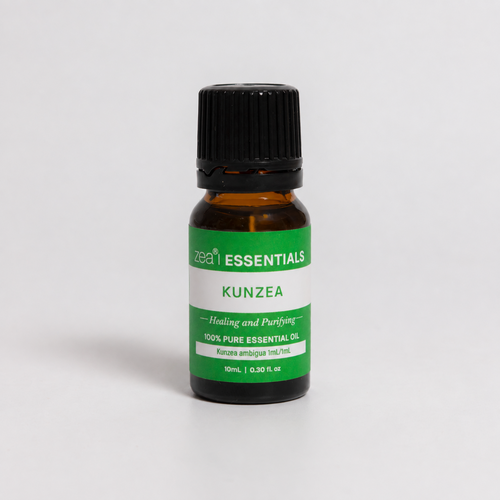
- Kunzea - Zea's own Kunzea Essential Oil, for a layered native, green-forest character.
- Lemon-scented oils, for a brighter top note against the mintier base.
- Lavender, to soften and round out the herbaceous edge for evening use.
A simple diffuser starting point is 2 drops Peppermint Gum, 2 drops Kunzea and 1 drop Lavender - green, minty and calm, without the sharpness of a straight cineole blend. For a broader range of single-origin Australian native oils to build a blend around, browse Zea's Australian Native Essential Oils collection, or the full Essential Oils collection if you're comparing options more broadly.
Peppermint Gum oil vs standard Eucalyptus oil: which one do you want?
Both come from eucalypts, and both are genuinely "eucalyptus" oils - the difference is entirely in the species and its dominant chemistry, not in quality or purity.
- Choose standard Eucalyptus (E. globulus/E. radiata-type) for the sharp, clearing, classically medicinal-smelling scent - a strong choice for a daytime diffuser blend or a steam.
- Choose Peppermint Gum (E. dives) when you want a softer, minty, more herbaceous eucalyptus note - better suited to evening diffusing, or blending where a sharp camphor top note would dominate everything else.
Neither oil is formulated or sold as a decongestant, cold or flu remedy, and neither carries an ARTG listing - both are cosmetic and aromatherapy products only.
How to use Peppermint Gum Eucalyptus Oil
- Diffusion: 3-5 drops in a standard ultrasonic diffuser, run for 30-60 minutes at a time in a well-ventilated room.
- Topical dilution: a widely used cosmetic guideline from the National Association for Holistic Aromatherapy is 1-2% for adult topical use (roughly 2-4 drops per 2 teaspoons of carrier oil), reduced to around 1% for children, the elderly or facial use, and around 0.5% for children under two3.
- Patch test first: apply a diluted drop to the inner forearm and wait 24 hours before wider use.
- Bath: disperse a few drops in a tablespoon of carrier oil or unscented dispersant before adding to bath water - never add neat essential oil directly, as it will float undiluted on the water's surface and can irritate skin.

Safety
- Never swallow eucalyptus oil, of any species. Clinical poisoning guidelines note that as little as 2-3mL can cause mild CNS depression - drowsiness, dizziness and unsteadiness - in a child, and 5mL or more can cause coma2.
- If ingestion happens or is suspected, call the Poisons Information Centre on 13 11 26 (Australia) immediately, or emergency services if the person is unconscious or having a seizure. Don't wait for symptoms to appear.
- Always dilute before topical use - never apply neat to skin.
- Patch test before wider use, particularly for anyone with sensitive skin.
- Not for young children without professional guidance, and check with your GP or pharmacist before use if pregnant, breastfeeding, or managing a health condition.
- Keep away from pets. Eucalyptus oils are a recognised risk to cats and dogs and should be diffused only in well-ventilated spaces pets can leave.
Peppermint Gum the essential oil vs Peppermint Gum the food ingredient
Peppermint Gum is one of the few Zea botanicals that spans both the essential oil range and Zea Gourmet's food range, and the two are genuinely different products with different ceilings on what can be said about them. The essential oil covered in this article is a cosmetic and aromatherapy product for diffusing and diluted topical use - it is not a food ingredient, and it is not formulated, tested or approved for consumption. The culinary Peppermint Gum used in Zea Gourmet recipes such as Peppermint Gum Chocolate Truffles is a separate, food-grade product, and it is described in purely culinary terms: flavour, aroma and Australian native provenance, with no therapeutic or wellness claim attached to it at all. Don't use the essential oil covered here as a substitute for a culinary Peppermint Gum ingredient in a recipe, and don't treat the food product as though it were an aromatherapy oil - they're made and labelled for different jobs.
If you're building a dilution routine around Peppermint Gum or other single-origin oils, Zea's guide on How to Dilute Essential Oils covers carrier oils and general dilution ratios in more depth, and the Eucalyptus species guide is the place to go if you want the full five-species comparison rather than the E. dives deep dive covered here.
Frequently asked questions
What is Peppermint Gum Eucalyptus Oil made from?
Eucalyptus dives, commonly called Broad-leaved Peppermint, a eucalypt native to south-eastern Australia. Its oil is chemically distinct from the cineole-dominant globulus and radiata oils most people picture as "eucalyptus oil"1.
Why does Peppermint Gum smell different from regular eucalyptus oil?
Because E. dives is commonly distilled with piperitone or phellandrene, rather than 1,8-cineole, as the lead constituent, depending on the chemotype - and piperitone-type oil is what gives Peppermint Gum its softer, minty, less medicinal character1.
Is Peppermint Gum oil the same as peppermint oil?
No. Peppermint oil comes from Mentha piperita, a herb in the mint family. Peppermint Gum comes from Eucalyptus dives, a tree in the Myrtaceae family - the "peppermint" in the name refers to the minty smell, not a shared botanical origin.
Can Peppermint Gum oil be used for colds or congestion?
No claim of that kind is made for this product. It is a cosmetic and aromatherapy oil, not an ARTG-listed medicine, and should not be used or marketed as a decongestant, cold or flu treatment.
Is Peppermint Gum oil safe to swallow?
No. Like all eucalyptus oils, it is toxic if ingested. Clinical guidance notes that 2-3mL can cause CNS depression in a child, and 5mL or more can cause coma2. Call the Poisons Information Centre on 13 11 26 if ingestion happens or is suspected.
Is the Peppermint Gum used in Zea Gourmet recipes the same as the essential oil?
No. They are separate products. The essential oil is a cosmetic aromatherapy product; the culinary Peppermint Gum used in recipes like Peppermint Gum Chocolate Truffles is a food-grade flavouring product, described only in culinary terms.
References
Sources open in a new tab so you don't lose your place.
- 1. Pearson, M. (1993). The Good Oil: Eucalyptus Oil Distilleries in Australia. Australasian Historical Archaeology, 11, 99-115. View source
- 2. The Royal Children's Hospital (Victoria). Clinical Practice Guidelines: Eucalyptus Oil Poisoning. View source
- 3. National Association for Holistic Aromatherapy. Safety Information: Essential Oil Dilution Guidelines. View source