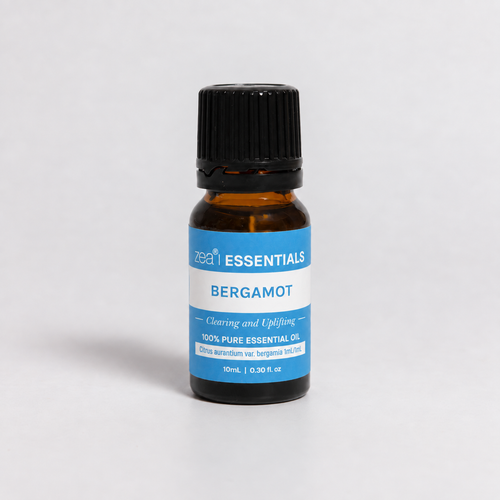
Bergamot essential oil is cold-pressed from the rind of Citrus bergamia, a citrus fruit grown almost exclusively on a narrow strip of Calabria, in southern Italy. It has a bright, slightly floral citrus aroma that sits at the centre of both fine perfumery and Earl Grey tea, and it comes with a genuinely important safety detail that most product pages skate past: standard Bergamot oil contains a compound called bergapten, which makes skin more reactive to UV light. This guide covers where Bergamot comes from, what it smells like, how it is used in blending, and exactly what the phototoxicity risk is and how "Bergamot FCF" oil solves it.

Bergamot at a glance
Here's the spec sheet - the details that matter if you're deciding whether Bergamot suits a blend, and whether it needs any special handling.
| Feature | Detail |
|---|---|
| Botanical name | Citrus bergamia Risso et Poiteau1 |
| Plant part used | Fruit rind (peel) |
| Extraction method | Cold pressing (rasping and pressing the peel) - the standard commercial method1 |
| Primary growing region | Calabria, Italy - more than 90% of world production1 |
| Dominant constituents (cold-pressed) | Limonene (25-53%), linalyl acetate (15-40%), linalool (2-20%)1 |
| Aroma profile | Bright, citrusy top note with a soft floral-green undertone - lighter and less sharp than lemon or orange |
| Blends well with | Lavender, Ylang Ylang, Cedarwood, Kunzea and other Australian native oils |
| Phototoxic? | Yes, standard cold-pressed oil (contains ~0.2% bergapten). Bergamot FCF is not1 |
What Bergamot oil is used for
Bergamot's biggest claim to fame outside the fragrance world is Earl Grey tea, where the rind oil - not the essential oil sold for diffusing, though chemically related - is used to scent black tea leaves. In perfumery, Bergamot is a foundational top note: it appears in a large share of modern fine fragrances because its bright, slightly bitter-floral citrus character lifts heavier base notes like woods and resins without reading as sharply "citrus" as lemon or lime. In home diffusing and blending, the same quality applies - Bergamot pairs naturally with warmer, deeper notes rather than sitting on its own.

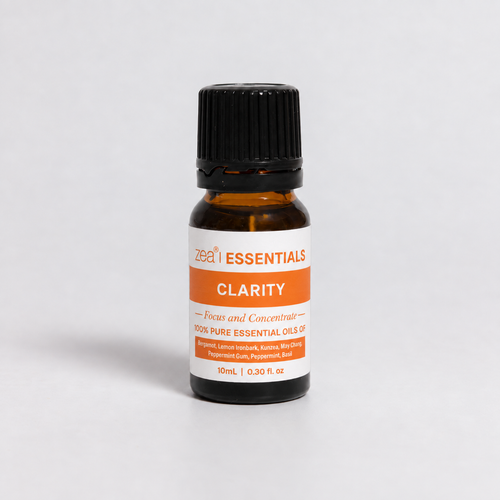
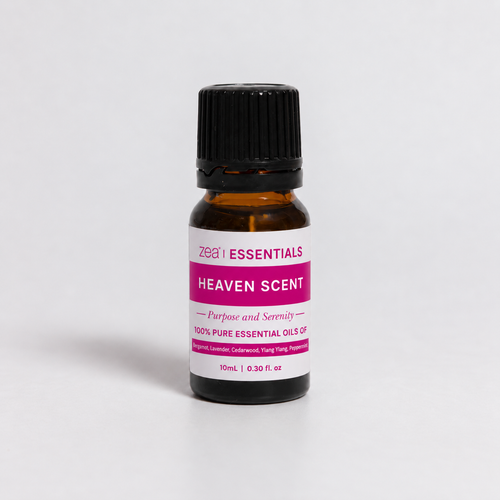
Zea stocks a Bergamot Essential Oil for exactly this kind of blending work. Zea's Heaven Scent Lifestyle Blend pairs Bergamot with Lavender, Cedarwood and Ylang Ylang, using Bergamot's brighter top note to balance the deeper, woodier notes underneath. The Clarity Lifestyle Blend takes a different approach, combining Bergamot with Lemon Ironbark, May Chang and Kunzea for a sharper, more herbaceous profile - a useful example of how Bergamot behaves alongside the Australian natives Zea builds most of its range around, rather than only alongside imported citrus and florals.
The photosensitivity question: bergapten and why it matters
Standard cold-pressed Bergamot oil is phototoxic, and the reason is a specific compound: bergapten, also known as 5-methoxypsoralen (5-MOP). Furanocoumarins as a group make up roughly 0.2% of the oil.1 Bergapten belongs to a class of plant compounds called furanocoumarins - or more specifically, it's a linear, psoralen-type furanocoumarin, the more phototoxic of the two furanocoumarin structural types2.
The mechanism is worth understanding precisely, because "phototoxic" gets thrown around loosely. Furanocoumarins like bergapten sit inert in the skin until they absorb UVA radiation. Once excited by UVA light, they react directly with the DNA in skin cells, forming both single-point adducts and interstrand crosslinks between the furanocoumarin and the pyrimidine bases in nuclear DNA2. This DNA damage is what produces the exaggerated sunburn-like reaction - redness, and in more severe cases blistering and lasting hyperpigmentation - that shows up on skin that had Bergamot oil on it before sun exposure2. It is a photochemical reaction, not an allergy, which is why it can affect anyone with enough bergapten and enough UVA exposure, not just people who are "sensitive" to fragrance.
This is a real, well-documented phenomenon rather than a theoretical caution label. It's also specific to UVA - the wavelength range that passes through window glass and clouds, which is part of why the guidance below applies more broadly than "just don't go to the beach."
What "Bergamot FCF" actually means
Bergamot FCF stands for furanocoumarin-free. It's the same Citrus bergamia oil, produced from the same cold-pressed starting material, but the bergapten has then been removed by vacuum distillation, giving an oil described as "chemically comparable" to the original cold-pressed oil in its other constituents1. In practice, FCF Bergamot keeps the same limonene/linalyl acetate/linalool backbone and a very similar aroma, minus the photosensitising risk of the standard oil.
The distinction matters for anyone formulating for leave-on skin products intended to be worn in daylight: the International Fragrance Association (IFRA) recommends that such products contain no more than 0.4% standard, non-FCF Bergamot oil - a low-enough ceiling that FCF Bergamot is the more practical choice whenever the product is meant to stay on skin exposed to sun1. A layer of Bergamot oil left on the skin's surface without being rubbed in is not itself sensitising - the risk specifically relates to the bergapten being absorbed into skin before UVA exposure1.

Using Bergamot safely
None of this makes standard Bergamot unusable - it just means using it the way most essential oil guidance already recommends, with one extra sun-exposure step:
- Dilute before topical use. As with any essential oil, Bergamot should be diluted in a carrier oil rather than applied neat, and this is standard practice regardless of the phototoxicity question.
- Patch test first. Apply a small diluted amount to an inconspicuous area of skin and wait 24 hours before wider use.
- Avoid sun exposure on treated skin. If using standard (non-FCF) Bergamot oil topically, keep the treated area out of direct sunlight and UV lamps (including tanning beds) for at least 12-18 hours, and be mindful that UVA passes through window glass.
- Diffusing carries no phototoxicity risk. The bergapten reaction requires the compound to be on the skin when UVA hits it - inhaling diffused Bergamot does not carry the same photosensitivity consideration.
- Choose Bergamot FCF for leave-on skin blends worn during the day, and reserve standard Bergamot for diffusing, perfumery, or bath products that are rinsed off before sun exposure.
- Check with a GP or pharmacist if pregnant, breastfeeding, or using the oil on a child, as with any essential oil.
This is standard dilution and sun-exposure guidance rather than medical advice, and it applies to cosmetic use of the oil - it is not a claim that Bergamot treats, prevents or improves any skin condition.
Bergamot alongside Australian natives
Bergamot's bright citrus top note is a useful counterpoint to the herbaceous, camphoraceous profile typical of Australian native oils like Kunzea. Zea's Kunzea Essential Oil, distilled from Kunzea ambigua grown in Tasmania, centres on alpha-pinene, 1,8-cineole and globulol - a very different chemical family to Bergamot's limonene-and-linalyl-acetate profile, which is exactly why the two work well together in a blend rather than competing for the same aromatic space. We've gone deeper on Kunzea's own composition, separate from this Bergamot-focused piece, in What Is Kunzea Oil?
If you're building a blend from Zea's Australian native essential oils collection, Bergamot is worth keeping on hand as the citrus element that lifts a heavier native-botanical base - the Clarity and Heaven Scent blends above are both existing examples of that pairing already at work. And if you're wondering how to verify what's actually in the bottle before you buy, we cover that separately in How Essential Oil Purity Is Verified.
Frequently asked questions
What does Bergamot smell like?
Bright and citrusy with a soft floral-green undertone - lighter, less sharp and slightly more complex than lemon or orange. It's the top note most people recognise from Earl Grey tea and from a large share of modern perfumes.
Is Bergamot oil phototoxic?
Standard cold-pressed Bergamot oil is phototoxic, because it contains bergapten (5-methoxypsoralen), a furanocoumarin that reacts with skin DNA under UVA light. Furanocoumarins together account for about 0.2% of the oil1. Bergamot FCF (furanocoumarin-free) has had the bergapten removed and does not carry this risk.
What is Bergamot FCF?
FCF stands for furanocoumarin-free. It's cold-pressed Bergamot oil that has been further vacuum-distilled to remove bergapten, giving an oil with a very similar aroma and the same core constituents but without the phototoxicity risk of the standard oil1.
Can you put Bergamot oil on your skin before going outside?
Not standard (non-FCF) Bergamot oil, if the treated skin will be in daylight - the bergapten it contains can react with UVA and cause an exaggerated sunburn-like reaction, including blistering and lasting hyperpigmentation in more severe cases2. Bergamot FCF does not carry this risk and is the more suitable choice for daytime, leave-on topical use.
Is Bergamot the flavour in Earl Grey tea?
Yes. Earl Grey tea is black tea scented with Bergamot rind oil, which is where its distinctive citrus aroma comes from - separate from (though related to) the essential oil sold for diffusing and topical blending.
References
Sources open in a new tab so you don't lose your place.
- 1. Navarra, M., Mannucci, C., Delbò, M. & Calapai, G. Citrus bergamia essential oil: from basic research to clinical application. Frontiers in Pharmacology 6:36, 2015. View source
- 2. Grosu (Dumitrescu), C., Jîjie, A-R., Manea, H.C. et al. New Insights Concerning Phytophotodermatitis Induced by Phototoxic Plants. Life 14(8):1019, 2024. View source