Essential oil purity is verified with gas chromatography-mass spectrometry (GC/MS), an analytical process that separates an oil into its individual chemical constituents and then identifies each one against a reference spectral library. A supplier's Certificate of Analysis (CoA) is the document that reports the results of that testing for a specific batch. Neither a label that says "100% pure" nor a bottle held up to the light can tell you whether an oil is genuine - only laboratory analysis can. This guide explains what GC/MS actually does, what a real Certificate of Analysis contains, how essential oils are commonly adulterated, and - just as importantly - what purity testing does not prove.

What GC/MS actually does
Gas chromatography-mass spectrometry is really two instruments joined together, and it does two separate jobs in sequence.
Separation first. A small sample of the oil is vaporised and carried by an inert gas through a long, narrow capillary column. Different chemical constituents in the oil move through that column at different speeds, so by the time the sample reaches the end of the column, its original mixture of compounds has been physically separated out into a sequence of distinct peaks1.
Identification second. Each separated peak then passes into the mass spectrometer, where it is fragmented and measured, producing a unique pattern that acts like a chemical fingerprint. That fingerprint is matched against a reference library of known compounds to identify exactly what the peak is1. The output is a chromatogram: a chart with a peak for every constituent in the oil, each one labelled with what it is and what percentage of the total oil it makes up.
This is why GC/MS is described in the essential oil quality literature as the standard technique for characterising an oil's composition - it does not just confirm "this smells like lavender", it reports the actual percentage of every major constituent, batch by batch2.
What a genuine Certificate of Analysis contains
A Certificate of Analysis is the document a reputable supplier issues for a specific production batch, reporting what that batch's testing found. A CoA that is worth trusting is specific to that batch, not a generic one-page document reused across every shipment. Here is what each field is actually telling you.
| CoA field | What it actually tells you |
|---|---|
| Botanical name | The exact species tested (e.g. Lavandula angustifolia, not just "lavender"). Common names cover multiple, chemically different species, so this is the field that confirms which plant was actually distilled. |
| Constituent profile | The GC/MS results themselves - each major chemical constituent and the percentage of the total oil it makes up. This is the core of the document; everything else is context around it. |
| Batch number | Identifies the specific production run the testing applies to. A CoA without a batch number cannot be tied to the bottle in your hand. |
| Distillation date | When the oil was extracted. Relevant both for freshness and for cross-checking against the batch number and any use-by guidance. |
| Country/region of origin | Where the plant material was grown. The same species can produce a noticeably different constituent profile depending on where and how it was grown, so origin is part of verifying the profile makes sense. |
| Extraction method | How the oil was obtained - steam distillation, cold pressing or solvent extraction. Different methods can pull out different constituents even from the same plant material. |
| Specific gravity / refractive index | Physical properties measured alongside GC/MS as a secondary check. They will not catch every kind of adulteration on their own, but a result that falls well outside the expected range for that species is a signal worth investigating further. |

How essential oils are actually adulterated
Adulteration is economically motivated - a cheaper input is used to stretch or replace a more expensive oil - and researchers who study it have documented a small number of recurring patterns, rather than an endless list of exotic tricks.
Dilution with a cheaper carrier or vegetable oil. A published quality-control study found this to be a particularly hard pattern to catch, precisely because, in the authors' words, it "modifies neither the qualitative composition of the resulting EO nor the marker's normalised percentage abundance" - a diluted sample can still show the right compounds in roughly the right ratios to each other, and one commercial lavender oil in the study was found to be adulterated by around 40-50% with vegetable oil once quantitative analysis (rather than relative percentages alone) was applied2.
Synthetic constituent top-up. Because natural oils are complex mixtures, one way to fake a "better" profile is to spike a genuine oil with a cheaper synthetic version of one of its own key constituents. The same study identified this in commercial bergamot and lavender samples, where synthetic linalool and linalyl acetate had been added to boost those constituents beyond the natural range2. Catching this kind of adulteration typically requires more than standard GC/MS - the researchers used chiral gas chromatography, which can distinguish the specific natural mirror-image form of a compound from its synthetic counterpart, since many essential oil constituents are chiral and nature reliably favours one form over the other2.
Cheaper species substitution. The same research documents genuinely cheaper plant species being sold in place of a named, more expensive one - sweet orange oil passed off as bitter orange, corn mint oil sold as peppermint, and lavandin (a lavender hybrid) sold as true lavender2. This pattern is exactly why a Certificate of Analysis should name the botanical species and not just a common name that several different plants can share.
What purity testing does not tell you
This is the part of the picture that matters most, and it is worth stating plainly rather than softening it. A GC/MS result and a Certificate of Analysis confirm what is chemically present in a bottle and in roughly what proportion. They do not confirm quality beyond that chemical profile, and they absolutely do not confirm any therapeutic effect.
Purity is not efficacy. An oil can be genuinely, verifiably pure - exactly the species it claims to be, with no dilution and no synthetic additions - and that says nothing about whether it relieves pain, improves sleep, calms anxiety or does anything else beyond smelling the way that species of plant is supposed to smell. Testing tells you the oil is what it says it is. It does not tell you what that oil will do for you, and no purity certificate should be read as a substitute for evidence of an actual health outcome.
Purity is also not the same as quality in the broader sense. Two batches can both pass GC/MS testing as genuine, unadulterated oil of the correct species, and still differ in aroma strength, freshness or overall character depending on growing conditions, harvest timing and storage. A CoA tells you the oil is authentic; it does not rank how good an authentic oil is.

What to actually look for as a buyer
You cannot run a GC/MS test at home, but there is a short, practical checklist that gets you most of the way to a genuine, well-documented oil without needing a laboratory:
- Ask for the batch-specific Certificate of Analysis, not a generic quality statement. If a supplier cannot produce one tied to a batch number, treat that as a gap, not a formality.
- Check the botanical name, not just the common name on the front label. "Lavender" and "peppermint" cover several different species and hybrids with genuinely different chemistry and cost2.
- Check the country or region of origin is stated, and that it's plausible for that species.
- Check the extraction method is named - steam distillation, cold pressing or solvent extraction all belong on a proper CoA.
- Treat "100% pure" on its own as marketing, not proof. The phrase costs nothing to print on a label. A batch-specific CoA is the actual proof; the label claim is just the headline.
Does organic certification prove the same thing as a Certificate of Analysis?
No, and this is a common point of confusion worth separating out clearly. Organic certification verifies how a plant was grown and processed - things like the absence of synthetic pesticides and fertilisers in cultivation. A Certificate of Analysis verifies what is chemically in the finished oil. An oil can be organically certified and still be diluted or adulterated after distillation, because organic certification was never designed to test the finished product's chemistry. The two documents answer different questions, and a genuinely well-documented oil should be able to produce both where organic certification is claimed.
Frequently asked questions
What does 100% pure mean on an essential oil label?
On its own, "100% pure" is a marketing claim with no independent verification behind it - it is not a regulated or tested term. The only way to substantiate it is a batch-specific Certificate of Analysis backed by GC/MS testing showing the oil matches the expected constituent profile for its stated species, with no dilution or synthetic additions detected.
What is GC/MS testing?
Gas chromatography-mass spectrometry is a two-stage laboratory technique. Gas chromatography first separates an oil sample into its individual chemical constituents; mass spectrometry then identifies each separated constituent and reports what percentage of the total oil it represents1.
What is a Certificate of Analysis?
A Certificate of Analysis (CoA) is a document a supplier issues for a specific production batch of essential oil, reporting the results of laboratory testing on that batch - typically the constituent profile from GC/MS, plus batch number, distillation date, country of origin, botanical name and extraction method.
Can you tell if an oil is adulterated at home?
Not reliably. Aroma, colour and a "cold test" on paper can occasionally flag an obviously diluted or fragranced product, but documented adulteration methods such as dilution with vegetable oil are specifically designed to leave the smell and appearance largely unchanged2. A batch-specific Certificate of Analysis from laboratory testing is the only reliable way to confirm purity.
Does organic certification mean the same as pure?
No. Organic certification verifies farming and processing inputs. A Certificate of Analysis verifies the chemical composition of the finished oil. They test different things, and neither one substitutes for the other.
References
Sources open in a new tab so you don't lose your place.
- 1. University of Toledo, Instrumentation Center. Gas Chromatography-Mass Spectrometer overview. View source
- 2. Capetti, F., Marengo, A., Cagliero, C., Liberto, E., Bicchi, C., Rubiolo, P. & Sgorbini, B. Adulteration of Essential Oils: A Multitask Issue for Quality Control. Three Case Studies: Lavandula angustifolia Mill., Citrus limon (L.) Osbeck and Melaleuca alternifolia (Maiden & Betche) Cheel. Molecules 26(18):5610, 2021. View source
Related reading
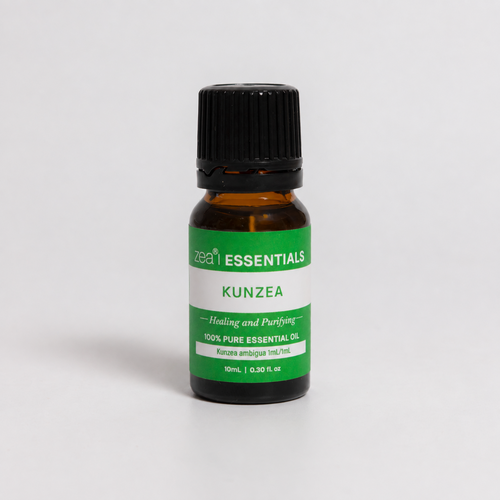
Zea's Kunzea Tasmania Essential Oil is steam distilled from Kunzea ambigua grown in Tasmania, across both sustainable plantations and wild-harvested stands, and every batch is tested this way before it goes to bottle. It sits within the Australian native essential oils collection alongside Zea's other Myrtaceae oils.
If you're comparing native Myrtaceae oils by name, Kanuka vs Kunzea vs Manuka Oil untangles three species that are constantly confused with each other, including the constituent profiles a CoA would report for each. For more on how Zea's own oil is produced, see How Kunzea Oil Is Grown and Distilled in Tasmania, and for how Kunzea's chemistry compares constituent-by-constituent to a more familiar oil, see What Is Kunzea Oil? and the Journal piece Kunzea Oil vs Tea Tree Oil - What's the Difference?