
If you live with scoliosis or you love someone who does, you'll know it's about far more than the shape of a spine on an X-ray. It's the dull ache that settles in by mid-afternoon. The stiffness after a long drive. The muscles on one side of your back that always seem to be working overtime while the other side quietly gives up. For a lot of people, that day-to-day discomfort comes down to one quiet culprit working away beneath the surface: inflammation.
Here's the encouraging part. While the curve in your spine may not change, inflammation is one of the most manageable pieces of the scoliosis puzzle. There's a great deal you can do to calm the irritation around the curve, through medication when it's needed, yes, but also through everyday choices like what you put on your plate, how you move your body, and the natural supports you reach for at the end of a long day.
In this blog, we'll look at what scoliosis is and why it so often leads to inflammation and pain. We'll unpack what anti-inflammatories actually means, both the pharmacy kind and the natural, lifestyle kind, and share simple, gentle ways to soothe a sore back.
What Is Scoliosis?
Your spine has a few natural, gentle curves when you look at it from the side, that's completely normal and healthy. Scoliosis is different. It's a sideways curve of the spine, often shaped like a "C" or an "S" when viewed from behind. Sometimes the curve also has a slight twist or rotation to it, which is why one shoulder, hip, or shoulder blade can end up sitting a little higher than the other.
Scoliosis is more common than many people realise. The most common form, called idiopathic scoliosis (meaning there's no single known cause), affects an estimated 2-3% of adolescents. It's often first spotted during growth in the teenage years, but it doesn't only belong to the young. Many adults live with scoliosis too, either a curve they've carried since childhood, or degenerative scoliosis, which develops later in life as the discs and joints of the spine gradually wear with age.
The important thing to know is that scoliosis sits on a spectrum. Plenty of people have a mild curve and barely notice it. Others find it has a real impact on comfort, movement, and quality of life. Wherever you fall on that spectrum, understanding why it can hurt is the first step to feeling better.

Where Does Inflammation Come From?
A curved spine changes the way load travels through your back. Instead of weight being shared evenly, certain joints, muscles, and nerves end up taking more than their fair share and over time, that uneven pressure can lead to irritation, swelling, and inflammation.
A few things tend to contribute:
-
Uneven muscle workload: The muscles on one side of the curve stretch and tire from being overworked, while those on the other side tighten and shorten. This imbalance is a common source of fatigue and aching.
-
Joint strain: The small facet joints that link your vertebrae can become overloaded on the compressed side of the curve, leading to localised inflammation and stiffness.
-
Wear and tear: In adults especially, the natural ageing of spinal discs and joints can add a degree of arthritis-like inflammation into the mix.
-
Nerve irritation: In more pronounced curves, narrowed spaces where nerves exit the spine can cause irritation, sometimes felt as radiating pain, tingling, or discomfort into the hips and legs.
It's worth noting that the size of a curve doesn't reliably predict how much pain someone feels. A modest curve can be quite uncomfortable, while a larger one might cause very little bother. Pain is personal, which is exactly why a flexible, multi-pronged approach to managing inflammation tends to work best.
What Are Anti-Inflammatories?
This is where things get interesting, because the word anti-inflammatory covers two quite different ideas. Both have a role to play.
The Medication Kind
When most people hear anti-inflammatories, they think of NSAIDs; non-steroidal anti-inflammatory drugs like ibuprofen and similar over-the-counter options. These work by reducing the body's production of certain chemicals that drive inflammation and pain, and they can be genuinely helpful for settling a flare-up.
They're not a free pass to take indefinitely, though. Guidance generally favours using the lowest effective dose for the shortest sensible time, because longer-term use can carry risks to the stomach, kidneys, and heart for some people. There's even emerging research suggesting that routinely shutting down inflammation with medication may, in some cases, interfere with the body's natural pain-resolution process over the longer term.
The Natural and Lifestyle Kind
The second meaning is broader and, for everyday management, arguably more powerful: the foods, habits, and natural supports that help keep your body's overall inflammation levels in check. These won't replace medical care when you need it, but they're things you can weave into daily life, they tend to come with side benefits (better sleep, more energy, improved mood), and they put a bit of control back in your hands.

Everyday Ways to Calm Inflammation
Here are some gentle, practical strategies that many people with scoliosis may find helpful:
Eat With Inflammation In Mind
What you eat genuinely influences how inflamed your body feels. Research on anti-inflammatory, Mediterranean-style eating patterns has linked them to improvements in pain, stress, and sleep among people living with chronic pain. You don't need a complete diet overhaul, just lean gently towards:
-
Oily fish like salmon, sardines, and mackerel (rich in omega-3 fats)
-
A colourful mix of vegetables and fruit, especially leafy greens and berries
-
Nuts, seeds, olive oil, and other healthy fats
-
Herbs and spices such as turmeric and ginger
-
Less of the highly processed, sugary, and deep-fried foods that tend to fan the flames
Keep Moving, Gently
It can feel counterintuitive to move when your back hurts, but gentle, regular movement helps ease stiffness, support the muscles around your spine, and keep you mobile. Walking, swimming, yoga, pilates, and stretching are all popular, low-impact options. A physiotherapist or exercise physiologist can tailor things to your particular curve.
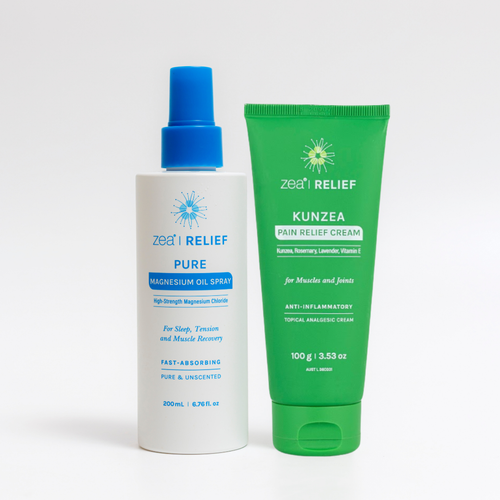
After exercise, supporting your muscles can be just as important as staying active. Our Magnesium Oil Topical Spray is a simple addition to your recovery routine, delivering pure magnesium directly to the skin to help relax tired muscles and support post-exercise recovery, so you can keep moving comfortably.
Use Warmth To Your Advantage
Cold weather can stiffen muscles and joints and make scoliosis pain feel worse. A warm bath using our Kunzea Bath Salts, a Natural Lupin Heat Pack across a tight lower back, or simply dressing warmly in winter can bring real relief by relaxing tense muscles and improving circulation to the area.
Prioritise Good Sleep
Pain and poor sleep feed each other in a frustrating loop. A supportive, medium-firm to firm mattress can help reduce morning stiffness, and a calming wind-down routine makes it easier to drift off despite discomfort.
Tend To Stress
Stress and muscle tension are close companions, and ongoing stress can heighten how intensely we feel pain. Breathing exercises, time in nature, and aromatherapy from our Zea Essentials range, are simple, accessible ways to help your nervous system settle.
Try Topical Support
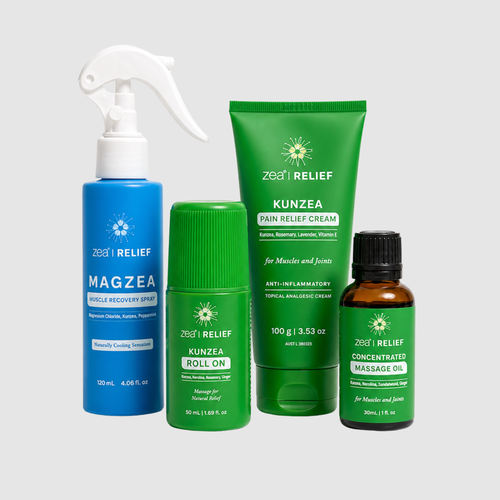
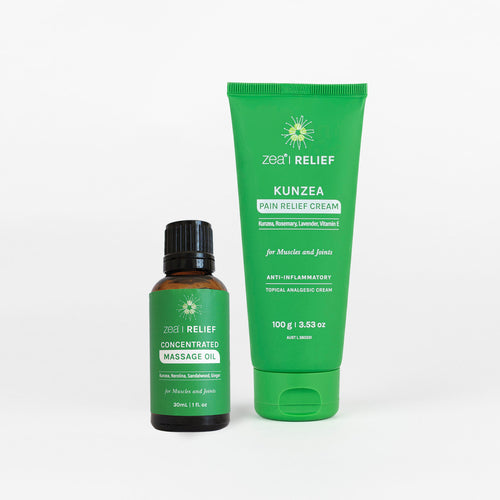
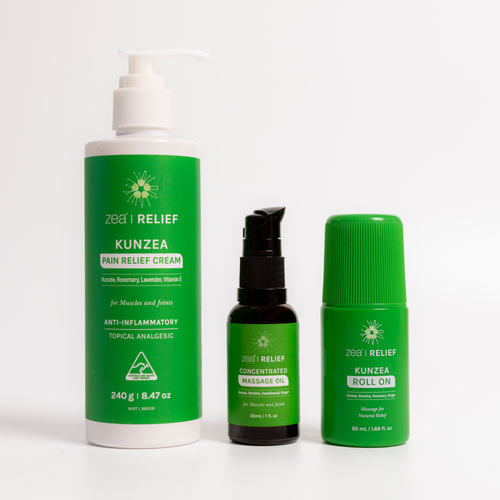
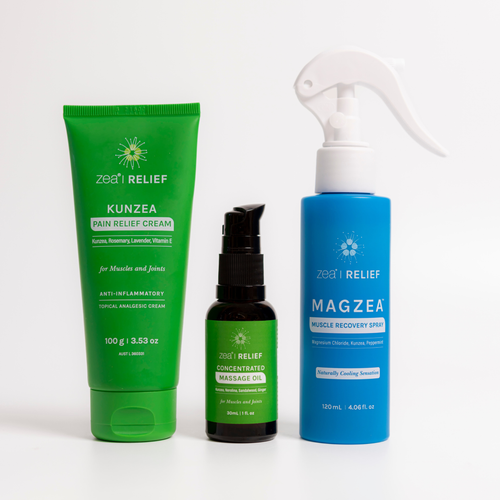
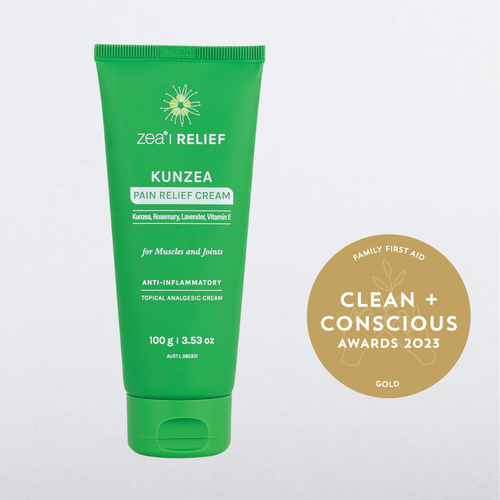
Massaging topical products directly into a sore area can ease localised tension, and it doubles as a moment of self-care that's easy to build into your morning or evening. Our Kunzea Pain Relief Cream is ideal for everyday use, combining Australian kunzea with naturally derived ingredients to help relieve mild muscle and joint pain.
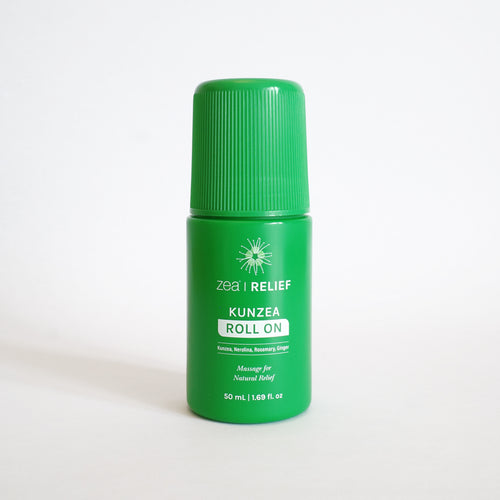
For targeted, on-the-go relief, the Kunzea Roll On is easy to apply directly to sore areas without any mess.
If you prefer a longer massage, our Kunzea Concentrated Massage Oil provides excellent glide while helping relax tight, tired muscles, making it perfect for use after exercise or at the end of the day.

When to Check In With a Professional
Scoliosis is usually manageable, but some signs are worth a prompt conversation with your healthcare provider, including:
-
Pain that's steadily worsening or no longer responding to your usual approaches
-
A curve that appears to be progressing
-
Numbness, tingling, or weakness in your arms or legs
-
Pain that's interfering with sleep, work, or the things you love to do
Getting the right support early can make a genuine difference to comfort and quality of life.
A Final Word
Living with scoliosis can be a long game, but it's far from a helpless one. By understanding the role inflammation plays, and gently turning down the dial through the food on your plate, the way you move, the warmth you reach for, and natural supports, you can give your body the best chance to feel more comfortable, day to day. Be patient with yourself, experiment to find what works for your back, and lean on your healthcare team as your partners along the way.
References
American Association for the Advancement of Science. (2022). Anti-inflammatory medications raise risk of chronic back pain in patients. https://www.aaas.org/news/anti-inflammatory-medications-raise-risk-chronic-back-pain-patients
Cleveland Clinic. (2026a). Scoliosis: What it is, types, causes, symptoms & treatment. https://my.clevelandclinic.org/health/diseases/15837-scoliosis
Cleveland Clinic. (2026b). Idiopathic scoliosis: What it is, symptoms & treatment. https://my.clevelandclinic.org/health/diseases/idiopathic-scoliosis
Medical News Today. (2023). Does scoliosis cause back pain? https://www.medicalnewstoday.com/articles/does-scoliosis-cause-back-pain
Sala-Climent, M., López de Coca, T., Guerrero, M. D., Muñoz, F. J., López-Ruíz, M. A., Moreno, L., Alacreu, M., & Dea-Ayuela, M. A. (2023). The effect of an anti-inflammatory diet on chronic pain: A pilot study. Frontiers in Nutrition, 10, Article 1205526. https://doi.org/10.3389/fnut.2023.1205526
Spine-Health. (2023). Common NSAIDs for back and neck pain. https://www.spine-health.com/treatment/pain-medication/common-nsaids-back-and-neck-pain
![Kunzea Pain Relief Cream [Value Pack]](http://www.zea.com.au/cdn/shop/files/Neutral_Images_Website_1080_x_1080_12_aeeb7fb5-6b18-4315-99ea-c7a97403e37a.png?v=1776732033&width=500)


