A liniment is a thin, quickly-absorbed topical preparation, traditionally alcohol- or oil-based, designed to be rubbed into the skin rather than smoothed on. That single detail, rubbed rather than applied, is what separates a true liniment from a cream, gel or balm. Liniments have a lower viscosity than any of those formats, sit closer to a lotion than a paste, and are built to be worked into sore muscle with friction, not left sitting on the surface. The word itself comes from the Latin linere, to smear or anoint, and pharmacists have used "linimentum" for this exact kind of rub-in liquid for centuries.
If you've ever picked up a bottle labelled "liniment" at a pharmacy and wondered whether it's really any different to the tub of cream sitting next to it, or why some rubs feel thin and disappear in seconds while others sit on the skin for an hour, this guide untangles the format properly, cream, gel, balm and massage oil included, and shows exactly where a roll-on liniment like Zea's Kunzea Roll On Liniment fits into that picture.
The five-way format comparison, at a glance
This is the table worth bookmarking. Every topical format is built around a different base, and that base decides how fast it absorbs, how much it leaves behind, and what job it's actually suited to3.
| Format | Base | Consistency | Absorption | Residue | Best-suited use |
|---|---|---|---|---|---|
| Liniment | Alcohol, oil, or an alcohol/oil blend | Thin liquid, similar to a lotion | Fast; applied with rubbing friction | Minimal, non-greasy | Pre- or post-activity rub, everyday muscle care |
| Cream | Oil-in-water or water-in-oil emulsion, roughly equal parts oil and water | Smooth, spreadable, semi-solid | Moderate | Light film | Daily targeted application, sustained skin contact |
| Gel | Hydrogel polymer (carbomers, celluloses) in a water or alcohol solvent3 | Clear, jelly-like | Fast, cooling as the solvent evaporates | Very light, non-oily | Fast cooling relief, visible skin (no residue on clothes) |
| Balm | Oleaginous base (waxes, butters, oils)3 | Thick, solid at room temperature, melts on contact | Slow | Heavy, occlusive film | Overnight or long-hold use, dry or cracked skin |
| Massage oil | Carrier oil, undiluted or lightly blended | Fluid, slippery, does not thicken | Slow, sits on the surface to reduce friction | Oily film (by design) | Hands-on massage, larger muscle groups |
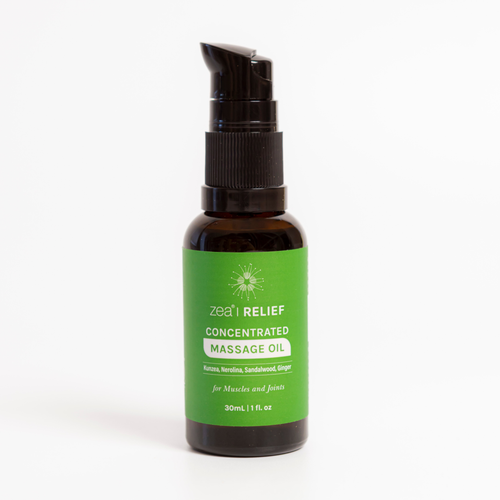
Notice the pattern: a liniment and a massage oil can look similar in the bottle, but they're built for opposite jobs. A massage oil is designed to stay slippery so a masseuse's hands can glide, which is exactly why Kunzea Concentrated Massage Oil is sold separately to the roll-on liniment rather than as one product trying to do both jobs.
A short history of liniments
Rubbing oil into sore muscle is one of the oldest documented forms of pain care, but the liniment as a defined pharmacy category, a liquid preparation applied specifically with friction rather than simply poured or smoothed, took shape as apothecaries began formalising rub-in remedies for muscular complaints. By the 19th century, liniments were a fixture of both household medicine cabinets and working stables. Horses doing hard daily labour on farms and in transport needed their legs and joints kept loose, and liniments, rubbed in by hand after a day's work, became a standard part of that care1.

One historical branch of the liniment family is worth naming honestly: the rubefacient, a preparation built to mildly irritate the skin on purpose. The idea, known as counter-irritation, is that irritating the sensory nerve endings at the skin's surface can alter or offset the sensation of pain in the muscle or joint underneath, and the visible reddening comes from the skin's blood vessels dilating in response2. Many 19th and early 20th century liniments leaned hard on this mechanism, often with harsh ingredients by today's standards. It's also fair to say the clinical evidence for rubefacients specifically has not held up well under modern review: a Cochrane analysis of topical rubefacients containing salicylates concluded that the evidence "does not support" their use for acute injuries, and that for chronic conditions their efficacy "compares poorly" with topical non-steroidal anti-inflammatory drugs2. That's a useful distinction to hold onto. Not every liniment works by irritating the skin, and Zea's Kunzea-based liniment isn't formulated as a counter-irritant rubefacient; it relies on Kunzea oil's own constituents rather than deliberate skin irritation, which is a different mechanism to the historical salicylate-and-capsicum rubs the word "liniment" sometimes still calls to mind.
What has stayed constant across two centuries is the application method itself. A 2022 real-world study of 3,600 people using a compound liniment for muscular and joint pain recorded the drug being applied "two to four times per day" directly to the affected area, with a 78.31% pain relief rate reported after a week of use1. Frequent, friction-based, targeted application is still the whole point of the format.
How a roll-on applicator changed the format
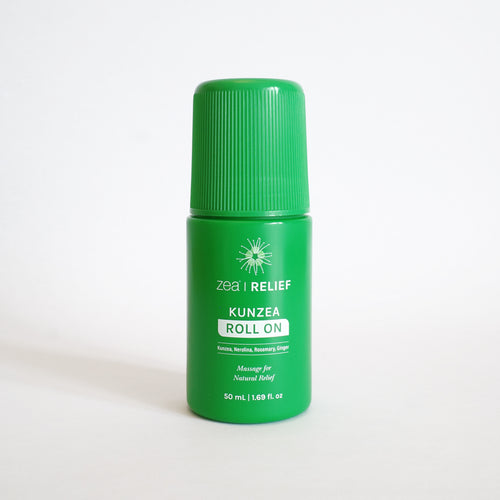
Traditional liniments were poured onto a cloth or straight into the palm, which works but wastes product and leaves hands smelling of whatever you just applied. The roll-on ball changed that. The design, a rotating ball housed in the cap of a container so product is dispensed only as the ball turns against skin, was patented by Chicago inventor Edward Williams in 1959 as a "roll-on applicator and skin massager for use with collapsible type dispensing tubes," explicitly designed to apply creams and salves "without the necessity of having to soil the hands"4. The same mechanism that made roll-on deodorant a bathroom staple turned out to be just as useful for a liniment: it doses consistently, keeps the product off your fingers until it's on the muscle, and gives the rubbing motion a liniment needs almost for free, since the ball itself works the product into the skin as it rolls.
That's the applicator behind Kunzea Roll On Liniment: a controlled dose, applied hands-free, with the rolling action doing part of the rubbing work a liniment format calls for. It's a genuinely different experience to unscrewing a jar of Kunzea Pain Relief Cream and working it in by hand, even though both products share the same active ingredient.

Choosing between formats for everyday use
None of these formats is universally "better." The right pick depends on when and where you're applying it:
- Reach for a liniment like the Kunzea Roll On when you want a quick, no-mess rub before or after activity, or on a busy day when you don't have time to properly work in a cream. The thin base and roll-on applicator mean it's dry to the touch within minutes.
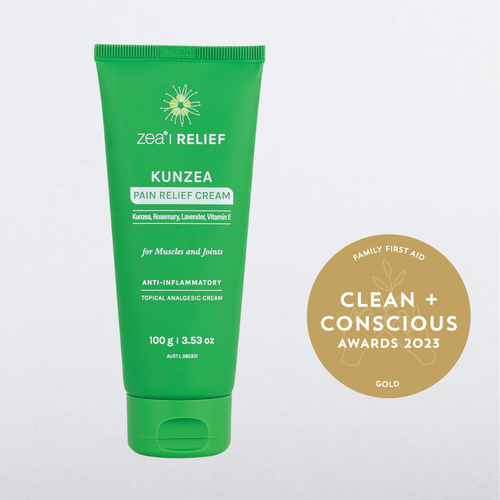
- Reach for a cream such as Kunzea Pain Relief Cream when you want sustained, hands-on contact with a specific spot, worked in properly, once or twice a day.
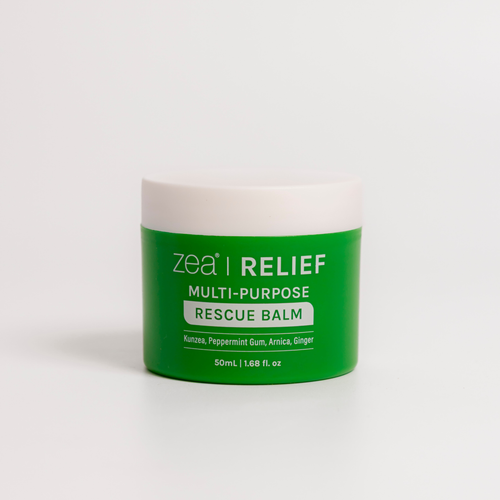
- Reach for a balm like the Multipurpose Rescue Balm for overnight use or dry, tired skin that benefits from a heavier, longer-sitting layer.
- Reach for a massage oil such as Kunzea Concentrated Massage Oil when someone else's hands are doing the work and you need genuine glide, not fast absorption.
- Reach for heat alongside any of the above, a warm shower or a product from the heat pack collection before applying a liniment or cream can help the muscle feel more receptive to the rub-in.
Several of Zea's formats, including the roll-on liniment, the cream and the massage oil, are built around the same active ingredient, Kunzea oil, sourced from sustainably managed Tasmanian plantations as well as wild-harvested stands. If you want the full picture on that ingredient itself, including how it's distilled and what it's studied for, see Kunzea Tasmania Essential Oil and the Journal explainer Kunzea Oil vs Tea Tree Oil. And if Kunzea's place in the wider Myrtaceae family (alongside Kanuka and Manuka) is the part you're curious about, we've covered that separately in Kanuka vs Kunzea vs Manuka Oil.
One compliance note worth being upfront about: Kunzea Pain Relief Cream is registered with the Australian Register of Therapeutic Goods (ARTG) as a listed medicine (AUST L 360 331). That listing applies specifically to the cream. The Kunzea Roll On Liniment, Concentrated Massage Oil and Rescue Balm are cosmetic essential oil products, not separately ARTG-listed medicines, so any benefit described for those formats should be read as skin comfort and everyday muscle care rather than a therapeutic claim.
Frequently asked questions
Is a liniment the same as a cream?
No. A liniment is a thin liquid, closer to a lotion, designed to be rubbed in and absorbed quickly with little residue. A cream is a thicker oil-and-water emulsion designed to sit on the skin longer and be worked in by hand. They can share the same active ingredient without being the same format.
What is liniment used for?
Liniments are traditionally used to support everyday muscle care, rubbed into sore or stiff areas before or after activity. Historically they were also used on working animals, particularly horses, to keep legs and joints supple after physical labour1.
Does liniment absorb faster than cream?
Generally yes. A liniment's thinner, more fluid base absorbs faster and leaves less residue than a cream's thicker oil-and-water emulsion base, though the exact absorption rate depends on the specific formulation3.
Can you use a liniment before exercise?
Yes, this is one of the format's main advantages. Because a liniment absorbs quickly and leaves minimal residue, it can be rubbed in shortly before activity without leaving hands or clothing greasy, unlike a heavier balm or massage oil.
Is liniment safe on broken skin?
No. Liniments, like creams, gels and balms, are intended for intact skin only. Avoid applying any topical rub to broken, cut or irritated skin, and check with your GP or pharmacist if you're pregnant, breastfeeding, or unsure whether a product is suitable for your situation.
References
Sources open in a new tab so you don't lose your place.
- 1. Zhang, Y. et al. Safety and efficacy of compound methyl salicylate liniment for topical pain: a multicenter real-world study in China. Journal of Pain Research 15:3389-3399, 2022. View source
- 2. Matthews, P. et al. Topical rubefacients for acute and chronic pain in adults. Cochrane Database of Systematic Reviews, 2009. View source
- 3. National Academies of Sciences, Engineering, and Medicine. Topical Dosage Form Development and Evaluation - Compounded Topical Pain Creams. NCBI Bookshelf, NBK560354. View source
- 4. Williams, E. Roll-on Applicator. US Patent 2,892,202, filed 3 December 1957, granted 30 June 1959. View source