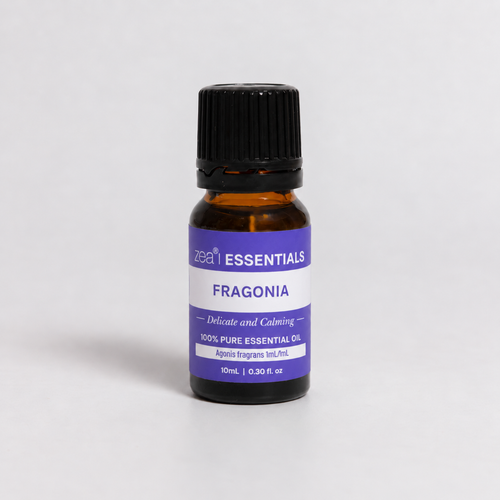
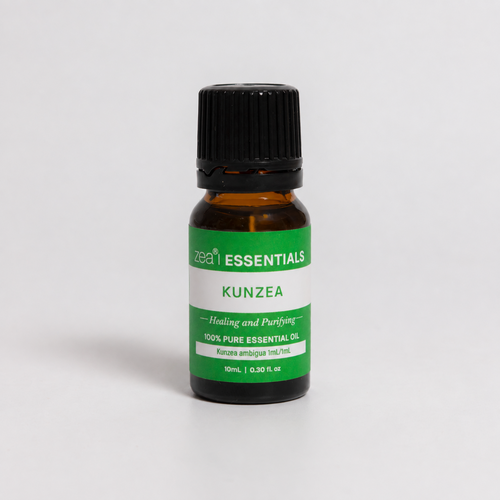
Fragonia is the trademarked name for an essential oil steam distilled from Taxandria fragrans, a shrub endemic to a narrow strip of southwest Western Australia that was known as Agonis fragrans until a 2007 taxonomic revision moved it into its own genus. It belongs to the Myrtaceae family alongside Tea Tree, Kunzea, Manuka and Eucalyptus, and is prized in aromatherapy for a fresh, green, gently camphoraceous aroma that reads softer than Tea Tree and lighter than Eucalyptus.
If you've come across Fragonia oil in a diffuser blend or a natural skincare formulation and wondered what it actually is, where it comes from, or how it compares to the tea tree and Kunzea oils it's often shelved beside, this guide covers all of it in one place.
Fragonia at a glance
Here's the direct comparison, side by side.
| Feature | Detail |
|---|---|
| Botanical name | Taxandria fragrans (J.R.Wheeler & N.G.Marchant), formerly classified as Agonis fragrans3 |
| Plant family | Myrtaceae (the same family as Kunzea, Tea Tree, Manuka and Eucalyptus) |
| Plant part used | Leaves and twigs |
| Origin | Endemic to southwest Western Australia - the Jarrah Forest, Swan Coastal Plain and Warren regions1 |
| Extraction method | Steam distillation |
| Notable constituents | Myrtenol recorded at 20% in an analysed sample; full published GC profiles for this species are scarce4 |
| Aroma profile | Fresh, green and lightly camphoraceous, gentler than Tea Tree and lighter than Eucalyptus |
| Blends well with | Lavender, Lemon, Rosemary, Eucalyptus and Kunzea |
| Regulatory status (as sold by Zea) | Cosmetic essential oil, not a listed medicine |
Botany and origin: the Western Australian story
Fragonia comes from a genuinely under-documented corner of Australian botany. The plant behind it, now called Taxandria fragrans, is a shrub growing to around 2 metres, flowering between February and May. It grows in grey sand, dark brown sandy loam, acid peaty sand and laterite, typically along the seasonally waterlogged margins of valleys, swamps and waterways1. Its distribution is genuinely narrow: the species occurs only across the Jarrah Forest, Swan Coastal Plain and Warren regions of the southwest, spanning local government areas including Albany, Augusta-Margaret River, Busselton, Denmark, Manjimup and Nannup1. It carries no conservation concern and is currently listed as not threatened2.
The taxonomy is worth understanding because it explains a genuinely confusing quirk you'll still see on ingredient labels and older reference material: many sources call this plant Agonis fragrans, while the currently accepted scientific name is Taxandria fragrans. Botanists Judy Wheeler and Neville Marchant published a full revision of the Western Australian genus Agonis in the journal Nuytsia in 2007, splitting off two new genera, Taxandria and Paragonis, on the basis of floral structure. Species now placed in Taxandria have 10 stamens arranged one opposite each sepal and one opposite each petal, with 2, rarely 3, ovules per cell of the ovary, only one of which develops into a fertile seed, distinct from Agonis in the strict sense, which typically carries 15 to 30 stamens3. Practically, this means "Fragonia" is the trade name for the essential oil, Agonis fragrans is the older and still widely used scientific name, and Taxandria fragrans is the current one - three names for the same plant, which is exactly the kind of naming history that keeps confusing shoppers browsing native Australian oils.
Commercially, Fragonia is a relatively recent addition to the essential oil world compared with long-established Australian natives like Tea Tree and Eucalyptus. Its narrow native range and the specificity required to select a favourable, well-balanced batch of leaf oil mean supply has always been smaller and more specialised than mainstream tea-tree production, which is part of why a well-sourced, properly documented page on the oil has been missing until now. Zea's own Fragonia Essential Oil sits within the same Australian native essential oils collection as the brand's Kunzea and Kanuka ranges.

Chemistry and aroma profile
Fragonia's chemistry is genuinely variable, which is part of what makes it an interesting oil rather than a simple one. Independent analysis of leaf oils from the species has recorded Myrtenol, a monoterpenol, at a concentration of 20% in a sampled oil4. In practical terms, this compositional variability is exactly why the commercial Fragonia oil sold in aromatherapy is produced from a specifically selected form of the species rather than any leaf oil labelled with the same botanical name - not every wild population of Taxandria fragrans smells or performs the same way.
To the nose, Fragonia reads as fresh, green and lightly camphoraceous - noticeably softer and rounder than the sharp, medicinal note of Tea Tree, and lighter and less resinous than Eucalyptus. It's often described as a "gentle" native Myrtaceae oil, which makes it a popular blending partner rather than a note that dominates. It pairs naturally with Lavender for a calming diffuser blend, with Lemon or other citrus oils for a brighter top note, and with Rosemary, Eucalyptus or Kunzea Tasmania Essential Oil for a more herbaceous, native-Australian blend profile.
How to use Fragonia oil
Fragonia is sold and used as a cosmetic essential oil, not a therapeutic product, so the guidance below is general good practice for any essential oil rather than a medical instruction.
- Diluting for topical use: essential oils are typically diluted in a carrier oil (such as jojoba, almond or coconut oil) before any skin contact, rather than applied undiluted. A common starting point for everyday use is a low percentage in the carrier oil, increasing only with experience and skin tolerance.
- Patch testing: apply a small diluted amount to the inside of your forearm and wait 24 hours before wider use, checking for any redness, itching or irritation.
- Diffusing: Fragonia's gentle, well-rounded aroma makes it a comfortable choice for an ultrasonic diffuser, either on its own or blended with Lavender or citrus oils. Follow your diffuser's instructions on water and oil ratios, and avoid running a diffuser continuously in a closed room.
- General precautions: keep essential oils away from the eyes and mucous membranes, out of reach of children and pets, and check with a GP or pharmacist before use if you are pregnant, breastfeeding, or have particularly sensitive skin.

Fragonia vs Tea Tree and Kunzea
All three are Myrtaceae oils and share a broad family resemblance, but they come from different species, different parts of Australia and different dominant chemistry.
Tea Tree oil (Melaleuca alternifolia) is defined by terpinen-4-ol, which the international tea tree oil standard requires at a minimum of 30%, with commercial oils typically sitting between 30% and 40%5. That constituent gives Tea Tree its characteristic sharp, medicinal edge. Fragonia's more variable, multi-constituent profile reads noticeably softer and greener by comparison, which is why some people who find Tea Tree too sharp for a diffuser blend prefer Fragonia instead.
Kunzea is a different genus again. Kunzea ambigua, the species behind Zea's Kunzea oil, is native to coastal New South Wales, Victoria and Tasmania rather than Western Australia, growing in heath and dry sclerophyll forest well outside Fragonia's native range6. The two oils share a family resemblance in aroma, both reading fresh and slightly camphoraceous, but they're genuinely separate ingredients with separate native ranges rather than regional variants of each other. We've covered Kunzea's full composition and its own comparison to Tea Tree in What Is Kunzea Oil? and Kunzea Oil vs Tea Tree Oil, and cover the wider Myrtaceae family tree, including how Kanuka and Manuka fit in, in Kanuka vs Kunzea vs Manuka Oil. This article's focus is Fragonia specifically, so we won't re-run those comparisons in full here.
If you're building a blend around Zea's Kanuka Essential Oil as well, all three Australian natives layer naturally together, since they share the same fresh, tea-tree-adjacent character while each bringing a slightly different note.
Frequently asked questions
What does Fragonia smell like?
Fresh, green and lightly camphoraceous, generally described as gentler and rounder than Tea Tree and lighter than Eucalyptus. It's a comparatively soft native Myrtaceae oil, which is part of why it blends easily with other oils rather than dominating a mix.
Is Fragonia the same as Tea Tree?
No. Fragonia comes from Taxandria fragrans (formerly Agonis fragrans), a Western Australian shrub, while Tea Tree oil comes from Melaleuca alternifolia. They're both in the Myrtaceae family and share a family resemblance, but Tea Tree's chemistry is anchored by terpinen-4-ol at 30 to 40%5, while Fragonia's profile is more variable and generally reads softer.
How do you dilute Fragonia?
As with most essential oils, Fragonia is diluted in a carrier oil (such as jojoba or almond oil) before topical use rather than applied undiluted, with a low percentage as a sensible starting point and a patch test 24 hours before wider use.
Can you diffuse Fragonia?
Yes. Fragonia's gentle aroma suits an ultrasonic diffuser well, either alone or blended with Lavender, citrus or other native Australian oils. Follow your diffuser's own water and oil ratio guidance and avoid running it continuously in a closed room.
Where does Fragonia come from?
Fragonia is native only to southwest Western Australia, specifically the Jarrah Forest, Swan Coastal Plain and Warren regions, where it grows in seasonally waterlogged sandy and peaty soils along valley margins, swamps and waterways1. It doesn't occur naturally anywhere else in Australia.
References
Sources open in a new tab so you don't lose your place.
- 1. FloraBase, Western Australian Herbarium, Department of Biodiversity, Conservation and Attractions. Taxon Profile of Taxandria fragrans (J.R.Wheeler & N.G.Marchant) J.R.Wheeler & N.G.Marchant. View source
- 2. FloraBase, Western Australian Herbarium. Taxon Profile of Agonis fragrans J.R.Wheeler & N.G.Marchant. View source
- 3. Wheeler, J.R. & Marchant, N.G. A revision of the Western Australian genus Agonis (Myrtaceae) and two new segregate genera Taxandria and Paragonis. Nuytsia 16(2):393-433, 2007. View source
- 4. Southwell, I.A. et al. 25 Years of Natural Product R&D with New South Wales Agriculture. Molecules 10(10):1000-1030, 2005. View source
- 5. Carson, C.F., Hammer, K.A. & Riley, T.V. Melaleuca alternifolia (Tea Tree) Oil: a Review of Antimicrobial and Other Medicinal Properties. Clinical Microbiology Reviews 19(1):50-62, 2006. View source
- 6. PlantNET, The NSW Plant Information Network System, Royal Botanic Gardens Sydney. Kunzea ambigua (Sm.) Druce. View source