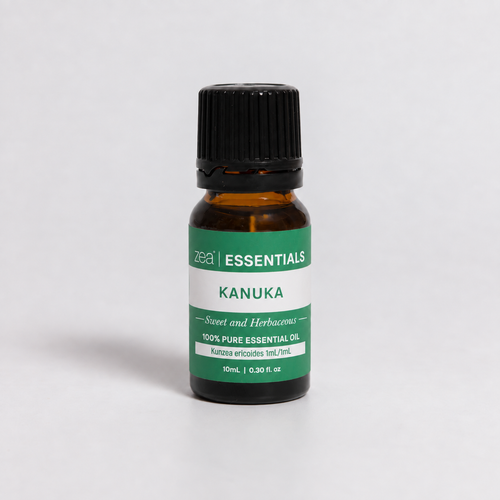
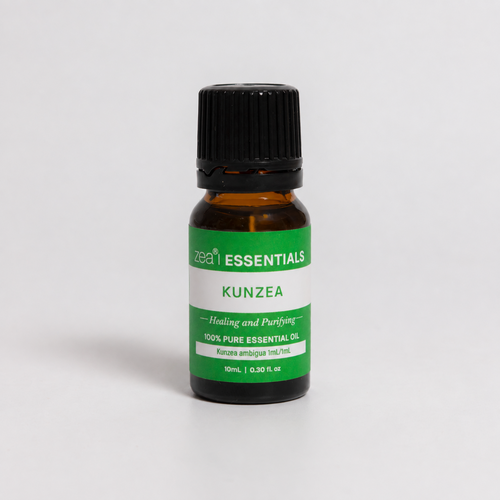
Kanuka, Kunzea and Manuka are three different plants that people mix up constantly, and the confusion is understandable. Kanuka oil comes from Kunzea ericoides, a tree native to New Zealand. Kunzea oil, the ingredient behind Zea's products, comes from Kunzea ambigua, a shrub native to eastern Australia. Manuka oil comes from Leptospermum scoparium, native to both New Zealand and south-eastern Australia. All three belong to the Myrtaceae family and share a tea-tree-like aroma, but their chemistry, origin and even their taxonomic history are genuinely different stories.
If you've ever seen "Manuka honey" on a supermarket shelf and assumed the essential oil sold under a similar-sounding name is the same product, or wondered why a Kunzea oil bottle and a Kanuka oil bottle smell almost, but not quite, alike, this guide untangles all three.
The three-way comparison, at a glance
Here's the direct comparison, side by side. The differences in dominant chemical constituents matter more than the family resemblance suggests1.
| Feature | Kanuka | Kunzea | Manuka |
|---|---|---|---|
| Botanical name | Kunzea ericoides | Kunzea ambigua | Leptospermum scoparium |
| Origin | Endemic to New Zealand. The species itself is confined to the northern South Island, while the "kanuka" name covers a wider ten-species complex45 | Endemic to eastern Australia - coastal New South Wales, Victoria and north-east Tasmania2 | Native to New Zealand, south-eastern Australia and the Chatham Islands3 |
| Dominant constituents | Alpha-pinene (often over 50%), with viridiflorol and viridiflorene1 | Alpha-pinene, 1,8-cineole and globulol form the core of the profile | Sesquiterpene hydrocarbons (60%+) and beta-triketones such as leptospermone7 |
| Aroma | Sharp, resinous, pine-forward | Fresh, herbaceous, camphoraceous | Earthy, honeyed, slightly medicinal |
| Common uses | Diffuser blends, skin-supporting cosmetic use | Massage and topical blends, aromatherapy for muscular comfort | Skincare formulations; the flower nectar is separately harvested for Manuka honey |
| Regulatory status (as sold by Zea) | Cosmetic essential oil, not a listed medicine | Cosmetic essential oil, not a listed medicine (Zea's Kunzea Pain Relief Cream is a separate, ARTG-listed product) | Cosmetic essential oil, not a listed medicine |
Kanuka: the New Zealand tree that used to be called Leptospermum
Kunzea ericoides, known in New Zealand as kanuka or white tea-tree, is a fast-growing tree endemic to New Zealand. This is where most sources get sloppy, so it is worth being precise: the species Kunzea ericoides in its strict sense is confined to the northern South Island, north of the Buller and Wairau Rivers and most common in North-west Nelson4. The common name "kanuka" is much broader, covering a complex of ten related species spread across both islands5. So a bottle labelled kanuka oil is not necessarily K. ericoides in the narrow botanical sense. Kanuka trees grow tall (often 10 metres or more) with fine, soft foliage, in contrast to the shorter, harder-leaved Manuka growing alongside it in the same coastal scrub.
Kanuka oil is steam distilled from the leaves and twigs, and its chemistry sets it apart clearly from both Kunzea and Manuka. Analysis of New Zealand-grown kanuka oil consistently shows alpha-pinene as the dominant compound, frequently exceeding half the total oil, alongside smaller amounts of viridiflorol and viridiflorene1. Some regional populations, particularly from Marlborough, show a notably different chemotype dominated by p-cymene instead, which is one reason researchers eventually split kanuka into multiple named populations rather than treating it as one uniform plant.
Zea stocks a Kanuka Essential Oil for exactly this reason - it is a genuinely distinct entry in the Myrtaceae essential oil family, not a rebadged Kunzea or Manuka oil, and pairs naturally with the Australian native essential oils collection for anyone building out a native-botanical routine.
Kunzea: the Tasmanian story
Kunzea ambigua is endemic to eastern Australia, occurring naturally along the coastal strip and adjacent plateaus of New South Wales, Victoria and north-eastern Tasmania2. It's an erect shrub, typically 2 to 4 metres tall, with small white flowers and fine, needle-like leaves - visually similar to Kanuka and Manuka at a glance, which is exactly why the confusion between the three persists.

Zea's Kunzea Tasmania Essential Oil is steam distilled from Kunzea ambigua grown in Tasmania - sourced from both sustainable plantations and wild-harvested stands, not wild-harvested alone. The species is a hardy coastal shrub that tolerates poor soils and salt exposure, which is part of why it establishes so well in Tasmanian conditions6. Kunzea oil's chemical profile centres on alpha-pinene, 1,8-cineole and globulol, a combination that has been studied for supporting healthy skin and muscular comfort when used topically. We've gone deeper on the full composition, including how it stacks up against Tea Tree oil, in What Is Kunzea Oil? and Kunzea Oil vs Tea Tree Oil, and cover the same ground with a more practical lens in the Journal piece Kunzea Oil vs Tea Tree Oil - What's the Difference? This article's focus is the Kanuka/Manuka axis those pieces don't cover, so we won't repeat that comparison here.
It's worth being precise about what Zea can and can't claim for the oil itself. Kunzea oil sold as an essential oil is a cosmetic product - it may help support skin health and is used traditionally for muscular comfort, but it carries no ARTG listing and no therapeutic indications of its own. That claims ceiling belongs to a different, separately regulated Zea product: Kunzea Pain Relief Cream, which is registered with the Australian Register of Therapeutic Goods (ARTG) as a listed medicine (AUST L 360 331). The oil and the cream are not interchangeable in a regulatory sense, even though the cream's active ingredient is the same Kunzea oil.
Manuka oil vs Manuka honey: two very different products
This is the confusion worth clearing up on its own. Manuka oil is steam distilled from the leaves and twigs of Leptospermum scoparium. Manuka honey is made by bees from the nectar of the same plant's flowers. They come from one species, but they are made from different parts of the plant, by entirely different processes, and end up as completely different product categories with different chemistry.
Manuka oil's constituent profile is almost the inverse of Kanuka's. Where kanuka oil is dominated by a single monoterpene (alpha-pinene), manuka oil is largely sesquiterpene hydrocarbons - typically 60% or more of the total oil - plus a distinctive group of beta-triketones, including leptospermone, that occur in very few other essential oils7. Manuka oil's triketone fraction has been studied for antimicrobial activity against a range of bacteria, and the chemotype varies noticeably by region, with East Coast North Island Manuka tending to carry the highest triketone levels7.
Zea's honey range includes Kunzea Honey, harvested from Kunzea blossom rather than Manuka - a genuinely different Tasmanian native honey, not a Manuka substitute, and worth knowing about if you've come across Manuka honey and assumed it's the only native option worth trying.
The naming trap: why Kanuka used to be a Leptospermum
Here's the detail that actually explains most of the public confusion. Kanuka wasn't always classified as a Kunzea. From its first formal botanical description in 1832 until 1983, it was named Leptospermum ericoides - grouped in the same genus as Manuka5. In 1983, botanist Joy Thompson moved it into the genus Kunzea, recognising that its floral structure was distinct enough from true Leptospermum species to warrant its own genus.
That wasn't the end of the story. In a 2014 revision published in PhytoKeys, New Zealand botanist Peter de Lange examined the "Kunzea ericoides complex" using morphology, cytology and DNA evidence gathered since 1999, and found it wasn't one variable species at all - it was ten distinct species, seven of them newly described, all endemic to New Zealand5. What everyday sources still call "kanuka" is really a cluster of closely related species that happen to share a common name and a similar oil profile.

This is also why "is Kanuka the same as Kunzea" is a genuinely reasonable question rather than a silly one: both are currently classified in the genus Kunzea, both were once lumped closer to Leptospermum, and the boundary between them has moved more than once in living memory. What hasn't moved is the species-level distinction that matters for anyone choosing an oil: Kunzea ericoides and Kunzea ambigua are different species, from different countries, with different dominant chemistry, sold as different products.
Choosing between them for everyday use
For everyday cosmetic use, the practical differences come down to aroma preference and what you're already using alongside it:
- Reach for Kanuka if you want a sharper, more resinous, pine-forward scent in a diffuser blend, and enjoy layering New Zealand native botanicals.
- Reach for Kunzea if you're building a routine around Zea's Tasmanian range - it pairs naturally with Kunzea Pain Relief Cream for anyone who likes a consistent scent profile across their topical and aromatic products.
- Reach for Manuka if you want the earthier, more medicinal aroma associated with the triketone-rich chemotype, and are separately interested in Manuka honey as a food product (remembering the two are unrelated purchases).
None of the three should be taken as a therapeutic treatment for any named condition - they're cosmetic essential oils, and any structure/function benefit ("may help support skin comfort," "may help maintain a sense of calm") should be read that way rather than as a medical claim.
Frequently asked questions
Is Kanuka the same as Kunzea?
No, but they're closely related. Kanuka (Kunzea ericoides) and Kunzea (Kunzea ambigua) are both classified in the genus Kunzea, but they are different species, native to different countries (New Zealand and Australia respectively), with different dominant oil constituents.
Is Kanuka oil the same as Manuka oil?
No. Kanuka oil comes from Kunzea ericoides and is dominated by alpha-pinene. Manuka oil comes from Leptospermum scoparium and is dominated by sesquiterpene hydrocarbons and beta-triketones. They grow in the same New Zealand scrubland and share a family resemblance in aroma, but the chemistry is quite different1.
Is Kanuka stronger than Tea Tree?
"Stronger" depends what you mean. Kanuka oil has a different chemical profile to Tea Tree oil (Melaleuca alternifolia) rather than a simply more concentrated version of it - Kanuka's alpha-pinene-dominant chemistry is quite distinct from Tea Tree's terpinen-4-ol profile. Neither should be assumed interchangeable in a recipe calling for the other.
Can you use Kanuka oil on skin?
Kanuka oil is used cosmetically and is generally diluted in a carrier oil before topical use, as with most essential oils. As with any essential oil, patch test first and avoid use on broken skin, and check with your GP or pharmacist if you are pregnant, breastfeeding, or have sensitive skin.
Is Kunzea Australian or from New Zealand?
Kunzea ambigua, the species behind Zea's Kunzea oil, is endemic to Australia - specifically coastal New South Wales, Victoria and north-eastern Tasmania2. It's Kanuka (Kunzea ericoides), a different species in the same genus, that is native to New Zealand.
References
Sources open in a new tab so you don't lose your place.
- 1. Porter, N.G. & Wilkins, A.L. Chemical, physical and antimicrobial properties of essential oils of Leptospermum scoparium and Kunzea ericoides. Phytochemistry 50(3):407-415, 1999. View source
- 2. PlantNET, The NSW Plant Information Network System, Royal Botanic Gardens Sydney. Kunzea ambigua (Sm.) Druce. View source
- 3. New Zealand Plant Conservation Network. Leptospermum scoparium var. scoparium factsheet. View source
- 4. New Zealand Plant Conservation Network. Kunzea ericoides factsheet. View source
- 5. de Lange, P.J. A revision of the New Zealand Kunzea ericoides (Myrtaceae) complex. PhytoKeys 40:1-185, 2014. View source
- 6. Australian National Botanic Gardens. Kunzea ambigua growing notes. View source
- 7. Mathew, C., Tesfaye, W., Rasmussen, P., Peterson, G.M., Bartholomaeus, A., Sharma, M. & Thomas, J. Manuka Oil - A Review of Antimicrobial and Other Medicinal Properties. Pharmaceuticals 13(11):343, 2020. View source